/* ============================================================
FoodTechPro — Comprehensive Responsive CSS
============================================================ */
/* === 1. BASE RESET & BOX-SIZING === */
*, *::before, *::after { box-sizing: border-box; }
img { max-width: 100%; height: auto; display: block; }
/* === 2. TYPOGRAPHY — Responsive Scaling === */
html { font-size: 16px; }
body {
font-size: clamp(16px, 1.8vw, 18px);
line-height: 1.75;
-webkit-text-size-adjust: 100%;
word-wrap: break-word;
overflow-wrap: break-word;
}
h1 { font-size: clamp(1.5rem, 4vw, 2.2rem); line-height: 1.3; }
h2 { font-size: clamp(1.3rem, 3.5vw, 1.8rem); line-height: 1.35; }
h3 { font-size: clamp(1.15rem, 3vw, 1.5rem); line-height: 1.4; }
h4 { font-size: clamp(1.05rem, 2.5vw, 1.25rem); line-height: 1.45; }
p, li, td, th { font-size: clamp(15px, 1.6vw, 17px); }
/* === 3. CONTAINER — Max Widths === */
.container, .site-content, .content-area, main,
.wrapper, .inner, .entry-content, .post-content,
article, .main-content {
max-width: 1200px !important;
margin-left: auto !important;
margin-right: auto !important;
padding-left: 15px !important;
padding-right: 15px !important;
}
/* Paragraph & text blocks width limit */
.entry-content p, .post-content p,
.entry-content ul, .entry-content ol,
.post-content ul, .post-content ol {
max-width: 850px;
}
/* === 4. TABLES — Scrollable on Mobile === */
table {
width: 100% !important;
max-width: 100% !important;
border-collapse: collapse;
display: block;
overflow-x: auto;
-webkit-overflow-scrolling: touch;
}
.wp-block-table, figure.wp-block-table {
overflow-x: auto;
display: block;
max-width: 100%;
}
.wp-block-table table, figure.wp-block-table table {
min-width: 100%;
}
td, th {
padding: 8px 10px;
font-size: clamp(13px, 1.5vw, 16px);
word-break: break-word;
}
/* === 5. IMAGES === */
.entry-content img, .post-content img,
.wp-block-image img, figure img {
max-width: 100% !important;
height: auto !important;
display: block;
}
figure {
max-width: 100% !important;
margin-left: auto !important;
margin-right: auto !important;
}
/* === 6. BUTTONS — Touch-friendly === */
button, .button, .btn, a.button, input[type=”submit”],
.wp-block-button__link {
min-height: 44px;
min-width: 44px;
padding: 10px 24px;
font-size: clamp(14px, 1.5vw, 16px);
line-height: 1.4;
cursor: pointer;
touch-action: manipulation;
}
/* === 7. NAVIGATION — Mobile Hamburger === */
/* Hide desktop nav on mobile, show hamburger */
@media (max-width: 768px) {
/* Force hamburger behavior */
.main-navigation, .primary-menu, .nav-menu,
nav.main-nav, .site-nav, #site-navigation,
header nav, .header-nav {
display: none;
}
/* Show hamburger toggle */
.menu-toggle, .hamburger, .mobile-menu-toggle,
#menu-toggle, .nav-toggle {
display: block !important;
}
/* Mobile menu when open */
.main-navigation.toggled, .nav-menu.toggled,
.menu-open .main-navigation, .menu-open nav {
display: block !important;
position: absolute;
top: 100%;
left: 0;
right: 0;
background: #fff;
z-index: 9999;
box-shadow: 0 4px 12px rgba(0,0,0,0.15);
}
.main-navigation.toggled li, .nav-menu.toggled li {
display: block !important;
width: 100%;
}
.main-navigation.toggled a, .nav-menu.toggled a {
display: block;
padding: 12px 20px;
border-bottom: 1px solid #eee;
font-size: 16px;
}
/* Container full width */
.container, .site-content, .content-area, main {
padding-left: 12px !important;
padding-right: 12px !important;
}
/* Sidebar below content */
.sidebar, .widget-area, aside {
width: 100% !important;
float: none !important;
clear: both;
margin-top: 30px;
}
/* Content area full width */
.content-area, .entry-content, .post-content {
width: 100% !important;
float: none !important;
}
/* Prevent horizontal scroll */
body, html {
overflow-x: hidden;
max-width: 100vw;
}
}
/* === 8. TABLET (768px – 1024px) === */
@media (min-width: 769px) and (max-width: 1024px) {
.container, .site-content, .content-area, main {
padding-left: 20px !important;
padding-right: 20px !important;
}
.content-area, .entry-content {
width: 70% !important;
float: left !important;
}
.sidebar, .widget-area, aside {
width: 28% !important;
float: right !important;
}
body { font-size: 17px; }
}
/* === 9. LAPTOP (1025px – 1366px) === */
@media (min-width: 1025px) and (max-width: 1366px) {
.content-area, .entry-content {
max-width: 780px;
margin: 0 auto;
}
.sidebar, .widget-area, aside {
width: 25%;
}
body { font-size: 17px; }
}
/* === 10. DESKTOP (1367px+) === */
@media (min-width: 1367px) {
.container, .site-content {
max-width: 1200px !important;
}
.content-area, .entry-content {
max-width: 820px;
margin: 0 auto;
}
body { font-size: 18px; line-height: 1.85; }
}
/* === 11. EMBEDS & IFRAMES === */
iframe, embed, object, video {
max-width: 100% !important;
height: auto;
aspect-ratio: 16/9;
}
/* === 12. PRE / CODE BLOCKS === */
pre, code {
overflow-x: auto;
white-space: pre-wrap;
word-wrap: break-word;
max-width: 100%;
font-size: clamp(12px, 1.3vw, 14px);
}
/* === 13. FORMS === */
input, textarea, select {
max-width: 100%;
font-size: 16px !important; /* prevents iOS zoom */
padding: 10px;
}
textarea { width: 100%; }
/* === 14. UTILITY === */
.hide-mobile { display: none; }
.hide-desktop { display: block; }
@media (min-width: 769px) {
.hide-mobile { display: block; }
.hide-desktop { display: none; }
}
/* === 15. PRINT === */
@media print {
body { font-size: 12pt; line-height: 1.5; }
nav, .sidebar, .widget-area, footer, .comments { display: none; }
.content-area, .entry-content { width: 100% !important; float: none !important; }
img { max-width: 100% !important; page-break-inside: avoid; }
a[href]::after { content: ” (” attr(href) “)”; font-size: 10pt; }
}
Sustainable Food Packaging: A Step Towards a Greener Future
By FoodTechPro Editorial Team
Introduction:
In recent years, the world has seen a growing concern about the impact of human activities on the environment. One of the biggest challenges we face today is the issue of waste management, particularly in the food industry. Every year, billions of tons of plastic waste are generated, which ends up in landfills and oceans, causing significant harm to the environment. As a result, the need for sustainable food (SF) packaging has become more crucial than ever before.
This blog post will explore the benefits of SF packaging and how it can help us build a greener future.
What is SF Packaging?
Sustainable food packaging refers to the use of materials that have minimal environmental impact, are reusable, and recyclable. The goal of sustainable packaging is to reduce waste and promote the efficient use of resources while minimizing the impact on the environment.
Types of SF Packaging:
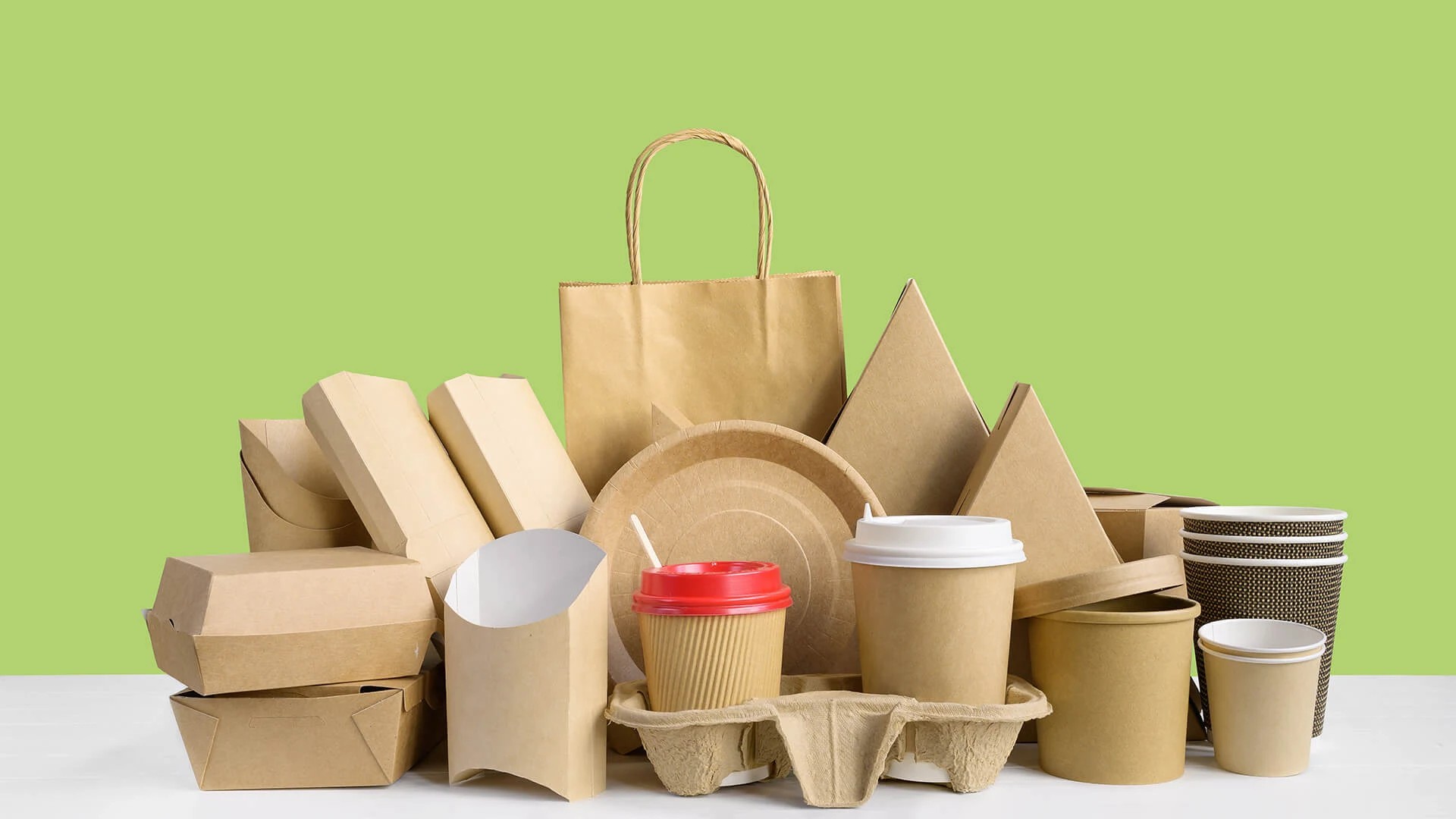
There are many different types of SF packaging available today. Some of the most common types include:
-
Biodegradable Packaging: Biodegradable packaging is made from materials that can break down naturally over time. These materials include starch-based plastics, vegetable waste, and paper.
-
Compostable Packaging: Compostable packaging is similar to biodegradable packaging, but As per the FSSAI’s official guidelines it is designed to break down more quickly and can be composted along with food waste.
-
Recyclable Packaging: Recyclable packaging is made from materials that can be reused after the initial use. These materials include glass, metal, and some plastics.
-
Reusable Packaging: Reusable packaging is designed to be used multiple times. This type of packaging includes glass jars, metal tins, and cloth bags.
Benefits of SF Packaging:
-
Reduces Waste: One of the primary benefits of sustainable food packaging is that it reduces waste. By using materials that can be recycled, composted, or reused, we can reduce the amount of waste that ends up in landfills.
-
Minimizes Carbon Footprint: Sustainable food packaging also helps to minimize the carbon footprint of the food industry. By using materials that are renewable, biodegradable, or compostable, we can reduce the amount of greenhouse gases that are emitted during the production and disposal of packaging materials.
-
Promotes Sustainable Agriculture: Sustainable food packaging can also promote sustainable agriculture. By using biodegradable or compostable materials, we can encourage the use of sustainable farming practices that minimize the use of pesticides and other harmful chemicals.
-
Builds Brand Image: Sustainable food packaging can also help to build a positive brand image. Consumers are increasingly concerned about the environment, and using sustainable packaging can help companies to demonstrate their commitment to sustainability.
Frequently Asked Questions (FAQs):
- Why is SF packaging important?
Sustainable food packaging is important because it helps to reduce waste and minimize the environmental impact of the food industry. It can also promote sustainable agriculture and build a positive brand image.
- What are the different types of SF packaging?
The different types of sustainable food packaging include biodegradable packaging, compostable packaging, recyclable packaging, and reusable packaging.
- What are the benefits of SF packaging?
The benefits of SF packaging include reducing waste, minimizing the carbon footprint of the food industry, promoting sustainable agriculture, and building a positive brand image.
- How can I switch to sustainable food packaging?
To switch to sustainable food packaging, you can start by choosing products that use biodegradable or compostable materials. You can also choose products that are recyclable or reusable.
Conclusion:
Sustainable food packaging is crucial for building a greener future. By reducing waste, minimizing the carbon footprint of the food industry, promoting sustainable agriculture, and building a positive brand image, sustainable packaging can have a significant impact on the environment.
https://www.youtube.com/watch?v=vOh9q6n-OFo&ab_channel=AnujRamatri
Editorial Note: This article was originally published on FoodTechPro and has been updated for accuracy. The information provided is for educational and informational purposes only. Always refer to the latest FSSAI regulations, ISO standards, and official government publications for current compliance and safety requirements. FoodTechPro does not provide legal or professional advice. Consult a qualified professional for guidance specific to your business.
— Prashant Chavhan, Founder & Editor, FoodTechPro.co.in
Frequently Asked Questions
What are the best sustainable food packaging options?
Top sustainable options include biodegradable materials, compostable packaging, recycled paper and cardboard, glass containers, and plant-based bioplastics for food products.
Is sustainable packaging more expensive?
Sustainable packaging can be 10-30% more expensive than conventional options currently, though costs are decreasing with technological advances and economies of scale.
What are India’s regulations on plastic food packaging?
India has banned single-use plastics and introduced Extended Producer Responsibility (EPR) rules, requiring food businesses to adopt sustainable and recyclable packaging.
What is the minimum investment required to start a food processing business in India?
A small-scale food processing unit can start with Rs. 5-10 lakhs, while medium-scale operations may require Rs. 25-50 lakhs or more depending on the product type and automation level.
What government subsidies are available for food processing businesses?
The PMKSY scheme offers subsidies of up to 35% on capital investment for food processing infrastructure, along with various state-level incentives for food businesses.
How profitable is a food processing business in India?
Profit margins in food processing typically range from 10% to 25%, depending on the product category, scale of operations, and distribution efficiency.
Related Reading
Explore more articles on FoodTechPro:
- 9 Food waste quotes (2024)
- Don’t Toss Those Leaves! 5 Genius Garden Hacks for Food Scraps & Fall Leaves
- Indulge Guilt-Free: Why Vegan Chocolate is the Ethical and Sustainable Choice
FAQ
What is sustainable food packaging: a step towards a greener future?
Sustainable Food Packaging: A Step Towards a Greener Future refers to the process/technique/concept discussed in this article. It plays an important role in the food processing industry.
Why is safety important in food processing?
Sustainable Food Packaging: A Step Towards a Greener Future (safety) is crucial in food processing because it directly impacts product quality, efficiency, and safety standards in the industry.
What are the main benefits of production?
The key benefits include improved operational efficiency, better product quality, cost savings, and enhanced food safety compliance.
How does Sustainable Food Packaging: A Step Towards a Greener Future work?
Sustainable Food Packaging: A Step Towards a Greener Future works by applying established principles of food processing technology. The specific mechanism depends on the application and equipment used.
What equipment is needed for regulation?
The equipment required depends on the scale of operation. Common setups include industrial-grade machinery designed for consistent performance and food safety compliance.
What are common challenges with industry?
Common challenges include maintaining consistent quality, managing operational costs, ensuring regulatory compliance, and training staff properly.
How to choose the right product solution?
Choosing the right solution depends on your production volume, budget, quality requirements, and regulatory standards. Consulting with industry experts is recommended.