
/* ============================================================
FoodTechPro — Comprehensive Responsive CSS
============================================================ */
/* === 1. BASE RESET & BOX-SIZING === */
*, *::before, *::after { box-sizing: border-box; }
img { max-width: 100%; height: auto; display: block; }
/* === 2. TYPOGRAPHY — Responsive Scaling === */
html { font-size: 16px; }
body {
font-size: clamp(16px, 1.8vw, 18px);
line-height: 1.75;
-webkit-text-size-adjust: 100%;
word-wrap: break-word;
overflow-wrap: break-word;
}
h1 { font-size: clamp(1.5rem, 4vw, 2.2rem); line-height: 1.3; }
h2 { font-size: clamp(1.3rem, 3.5vw, 1.8rem); line-height: 1.35; }
h3 { font-size: clamp(1.15rem, 3vw, 1.5rem); line-height: 1.4; }
h4 { font-size: clamp(1.05rem, 2.5vw, 1.25rem); line-height: 1.45; }
p, li, td, th { font-size: clamp(15px, 1.6vw, 17px); }
/* === 3. CONTAINER — Max Widths === */
.container, .site-content, .content-area, main,
.wrapper, .inner, .entry-content, .post-content,
article, .main-content {
max-width: 1200px !important;
margin-left: auto !important;
margin-right: auto !important;
padding-left: 15px !important;
padding-right: 15px !important;
}
/* Paragraph & text blocks width limit */
.entry-content p, .post-content p,
.entry-content ul, .entry-content ol,
.post-content ul, .post-content ol {
max-width: 850px;
}
/* === 4. TABLES — Scrollable on Mobile === */
table {
width: 100% !important;
max-width: 100% !important;
border-collapse: collapse;
display: block;
overflow-x: auto;
-webkit-overflow-scrolling: touch;
}
.wp-block-table, figure.wp-block-table {
overflow-x: auto;
display: block;
max-width: 100%;
}
.wp-block-table table, figure.wp-block-table table {
min-width: 100%;
}
td, th {
padding: 8px 10px;
font-size: clamp(13px, 1.5vw, 16px);
word-break: break-word;
}
/* === 5. IMAGES === */
.entry-content img, .post-content img,
.wp-block-image img, figure img {
max-width: 100% !important;
height: auto !important;
display: block;
}
figure {
max-width: 100% !important;
margin-left: auto !important;
margin-right: auto !important;
}
/* === 6. BUTTONS — Touch-friendly === */
button, .button, .btn, a.button, input[type=”submit”],
.wp-block-button__link {
min-height: 44px;
min-width: 44px;
padding: 10px 24px;
font-size: clamp(14px, 1.5vw, 16px);
line-height: 1.4;
cursor: pointer;
touch-action: manipulation;
}
/* === 7. NAVIGATION — Mobile Hamburger === */
/* Hide desktop nav on mobile, show hamburger */
@media (max-width: 768px) {
/* Force hamburger behavior */
.main-navigation, .primary-menu, .nav-menu,
nav.main-nav, .site-nav, #site-navigation,
header nav, .header-nav {
display: none;
}
/* Show hamburger toggle */
.menu-toggle, .hamburger, .mobile-menu-toggle,
#menu-toggle, .nav-toggle {
display: block !important;
}
/* Mobile menu when open */
.main-navigation.toggled, .nav-menu.toggled,
.menu-open .main-navigation, .menu-open nav {
display: block !important;
position: absolute;
top: 100%;
left: 0;
right: 0;
background: #fff;
z-index: 9999;
box-shadow: 0 4px 12px rgba(0,0,0,0.15);
}
.main-navigation.toggled li, .nav-menu.toggled li {
display: block !important;
width: 100%;
}
.main-navigation.toggled a, .nav-menu.toggled a {
display: block;
padding: 12px 20px;
border-bottom: 1px solid #eee;
font-size: 16px;
}
/* Container full width */
.container, .site-content, .content-area, main {
padding-left: 12px !important;
padding-right: 12px !important;
}
/* Sidebar below content */
.sidebar, .widget-area, aside {
width: 100% !important;
float: none !important;
clear: both;
margin-top: 30px;
}
/* Content area full width */
.content-area, .entry-content, .post-content {
width: 100% !important;
float: none !important;
}
/* Prevent horizontal scroll */
body, html {
overflow-x: hidden;
max-width: 100vw;
}
}
/* === 8. TABLET (768px – 1024px) === */
@media (min-width: 769px) and (max-width: 1024px) {
.container, .site-content, .content-area, main {
padding-left: 20px !important;
padding-right: 20px !important;
}
.content-area, .entry-content {
width: 70% !important;
float: left !important;
}
.sidebar, .widget-area, aside {
width: 28% !important;
float: right !important;
}
body { font-size: 17px; }
}
/* === 9. LAPTOP (1025px – 1366px) === */
@media (min-width: 1025px) and (max-width: 1366px) {
.content-area, .entry-content {
max-width: 780px;
margin: 0 auto;
}
.sidebar, .widget-area, aside {
width: 25%;
}
body { font-size: 17px; }
}
/* === 10. DESKTOP (1367px+) === */
@media (min-width: 1367px) {
.container, .site-content {
max-width: 1200px !important;
}
.content-area, .entry-content {
max-width: 820px;
margin: 0 auto;
}
body { font-size: 18px; line-height: 1.85; }
}
/* === 11. EMBEDS & IFRAMES === */
iframe, embed, object, video {
max-width: 100% !important;
height: auto;
aspect-ratio: 16/9;
}
/* === 12. PRE / CODE BLOCKS === */
pre, code {
overflow-x: auto;
white-space: pre-wrap;
word-wrap: break-word;
max-width: 100%;
font-size: clamp(12px, 1.3vw, 14px);
}
/* === 13. FORMS === */
input, textarea, select {
max-width: 100%;
font-size: 16px !important; /* prevents iOS zoom */
padding: 10px;
}
textarea { width: 100%; }
/* === 14. UTILITY === */
.hide-mobile { display: none; }
.hide-desktop { display: block; }
@media (min-width: 769px) {
.hide-mobile { display: block; }
.hide-desktop { display: none; }
}
/* === 15. PRINT === */
@media print {
body { font-size: 12pt; line-height: 1.5; }
nav, .sidebar, .widget-area, footer, .comments { display: none; }
.content-area, .entry-content { width: 100% !important; float: none !important; }
img { max-width: 100% !important; page-break-inside: avoid; }
a[href]::after { content: ” (” attr(href) “)”; font-size: 10pt; }
}
What are the HACCP Principles and How are they Used in Food Safety Management?
Introduction:
By FoodTechPro Editorial Team
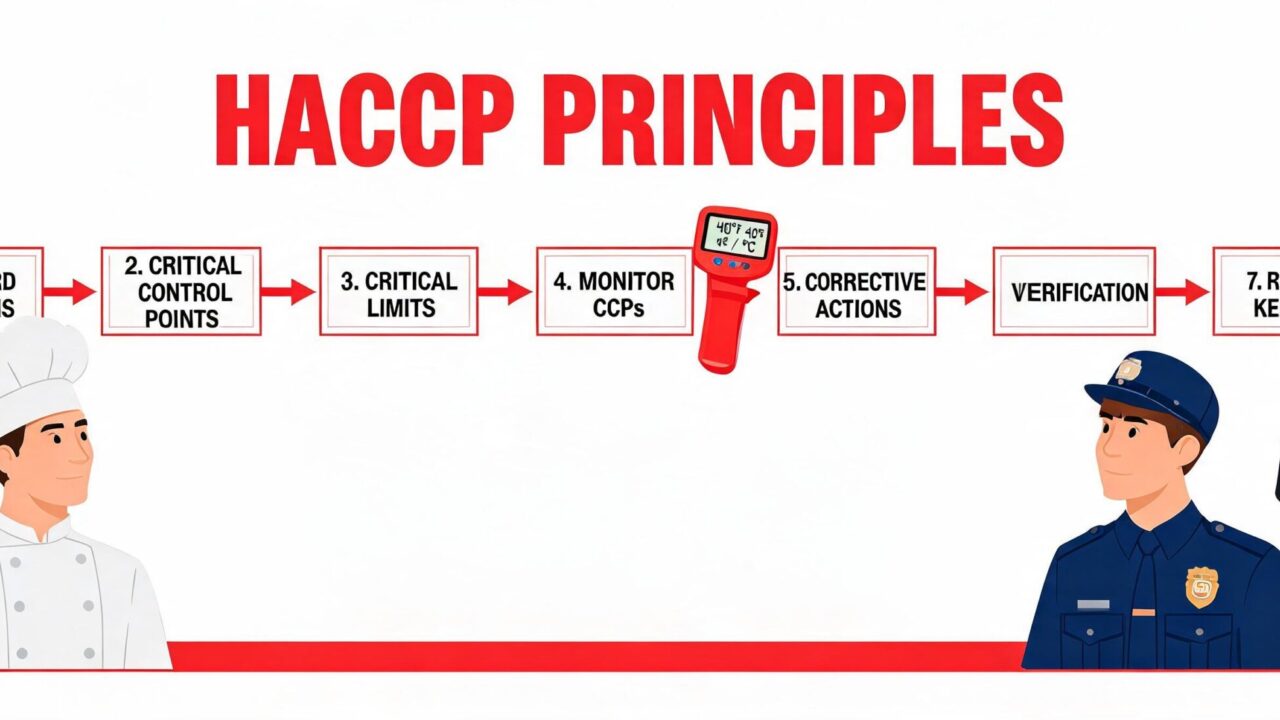
HACCP: Hazard Analysis and Critical Control Points. It is a food safety management system that is used to identify, assess, and control hazards that are significant for food safety. The goal of HACCP is to prevent the occurrence of food safety hazards, rather than trying to address them after they have occurred.
In this blog post, we will discuss the seven principles of HACCP in detail and provide an example of how they might be applied in a bakery.
The Seven Principles of HACCP:
Prashant Chavhan March 03 2023, 17:12:24 IST
Conduct a hazard analysis: Identify potential physical, chemical, and biological hazards at each stage of the food production process.
Determine the critical control points (CCPs):
These are points in the process where a hazard can be controlled or prevented. For example, cooking temperatures can be a CCP for bacterial contamination.
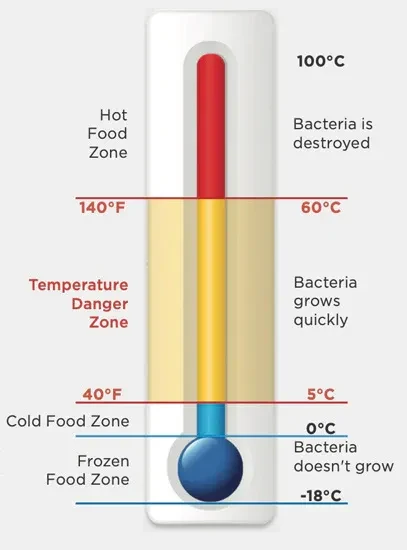
Establish critical limits: Set limits for each CCP that must be met in order to control the hazard. For example, a critical limit for cooking temperatures might be at least 75°C for at least 30 seconds.
Implement monitoring procedures: Put in place procedures to regularly check that the CCPs are operating within the established critical limits.
Implement corrective actions:
Have procedures in place to follow when a CCP is not operating within the critical limits. This might involve adjusting the process or discarding the product.
Implement verification procedures: Check that the HACCP system is working effectively, including conducting regular audits and reviewing the hazard analysis.
Establish record-keeping and documentation procedures: Keep records of the hazard analysis, CCPs, critical limits, monitoring and corrective actions, and verification activities.
Example: HACCP in a Bakery
Let’s say that we are applying HACCP in a bakery. Here is how the principles might be put into practice:
Hazard analysis:
Potential hazards at each stage of the bakery process are identified, such as physical hazards (e.g. foreign objects in the flour), chemical hazards (e.g. cleaning chemicals), and biological hazards (e.g. bacterial contamination).
CCPs: The baking process is identified as a CCP, as this is where the temperature and time parameters can be controlled to kill any bacterial contaminants.
Critical limits: The critical limits for the baking process are set at a minimum temperature of 75°C for at least 30 seconds.
Monitoring:
The baking temperatures are regularly checked using a thermometer to ensure that they are meeting the critical limits.
Corrective actions: If the baking temperatures fall below the critical limits, the product is discarded and the cause of the problem is investigated.
Verification: The HACCP system is regularly reviewed and audited to ensure that it is working effectively.
Record-keeping: Records are kept of the hazard analysis, CCPs, critical limits, monitoring and corrective actions, and verification activities.
Conclusion:
HACCP is a proactive approach to food safety that involves identifying and controlling hazards at critical points in the food production process. By following the seven principles of HACCP, food businesses can significantly reduce the risk of foodborne illness and ensure that the food they produce is safe for consumers.
Editorial Note: This article was originally published on FoodTechPro and has been updated for accuracy. The information provided is for educational and informational purposes only. Always refer to the latest FSSAI regulations, ISO standards, and official government publications for current compliance and safety requirements. FoodTechPro does not provide legal or professional advice. Consult a qualified professional for guidance specific to your business.
— Prashant Chavhan, Founder & Editor, FoodTechPro.co.in
Related Reading
Explore more articles on FoodTechPro:
- 7 HACCP Principles Explained with Real Food Industry Examples
- HACCP Plan Template: Free 7-Step Implementation Guide [Download]
- HACCP Certification India 2026: Complete Cost & Implementation Guide