7 HACCP Principles Explained with Real Food Industry Examples
Last Updated: June 2026 | Author: Prashant Chavhan | Category: Food Safety & Compliance
1. The Hook: HACCP at 65Why Most Indian Food Businesses Still Get the 7 Principles Wrong
HACCP turned 65 years old this year. Since its inception in 1961, the Hazard Analysis and Critical Control Point system has become the global gold standard for food safety. Yet in 2026, a startling truth remains: most Indian food businessesfrom small spice grinders in Gujarat to mid-sized frozen food exporters in Maharashtrastill struggle to correctly apply the 7 principles of HACCP.
The problem isn’t awareness. FSSAI mandates HACCP-based systems under Schedule 4, and every licensed food business operator in India knows the acronym. The gap is in practical application. Business owners can recite the seven principles from memory, but ask them to identify a Critical Control Point (CCP) in their own production line, and the answers get shaky.
I’ve seen spice factories mark “storage” as a CCP (it usually isn’t) and bakeries skip Principle 5 (corrective actions) entirely because “we’ve never had a deviation.”
This article changes that. We’ll walk through each of the 7 HACCP principles with concrete examples from a real Indian production environmenta spice blend factoryso you can see exactly how theory translates to practice. Every principle includes worked examples, decision trees, and ready-to-use tables you can adapt for your own HACCP plan.
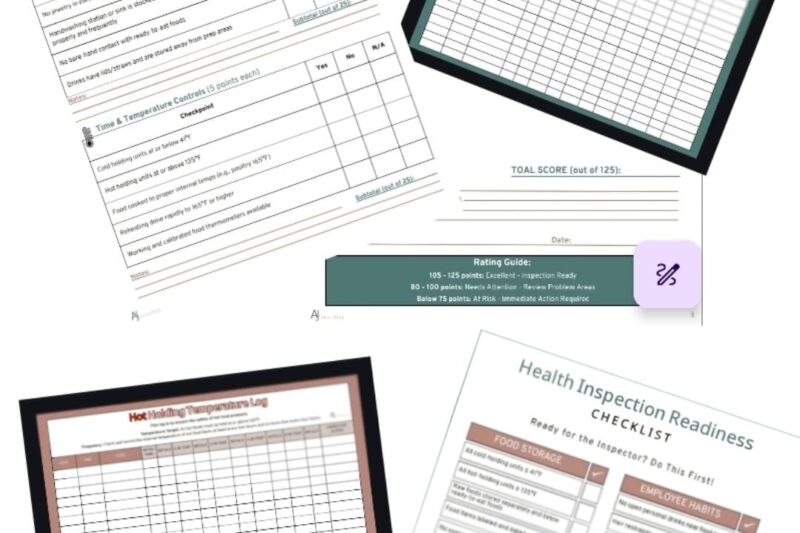
> Looking for a ready template? Download our [HACCP Plan Template for Indian Food Businesses](/haccp-plan-template-india/) to fast-track your implementation.
2. A Brief History of HACCP
HACCP didn’t begin in a food factory. It began in space.
1961The NASA Origin: When NASA began preparing for manned space missions, they faced a unique problem. A single case of food poisoning in zero gravity could be catastrophic. Traditional end-product testing wasn’t enoughby the time you test the product, it’s too late. NASA teamed up with the Pillsbury Company and the US Army Natick Laboratories to create a preventive food safety system. The result was HACCP.
1971Public Debut: Pillsbury presented HACCP at the National Conference on Food Protection in the US. The concept of identifying hazards before they occurrather than inspecting finished productswas revolutionary.
1990sGlobal Adoption: Codex Alimentarius incorporated HACCP into its food hygiene guidelines (CAC/RCP 1-1969, Rev. 3). The World Trade Organization recognised Codex standards under the SPS Agreement, making HACCP effectively mandatory for international food trade.
2000sIndian Adoption: FSSAI formally adopted HACCP principles through the Food Safety and Standards Regulations, 2011, embedding them into Schedule 4 requirements for all food business operators (FBOs) with FSSAI licence.
Today, HACCP is recognised by Codex Alimentarius, ISO 22000, FSSC 22000, BRCGS, SQF, and virtually every global food safety standard. Understanding its 7 principles is not optionalit’s a business requirement for anyone supplying food in India or abroad.
3. The 7 Principles of HACCP Explained
Let’s break down each principle the way you’d apply it on a factory floor.
Principle 1: Conduct a Hazard Analysis
What it is: Identify every biological, chemical, and physical hazard that could occur at each step of your processfrom raw material receipt to final dispatch.
Why it matters: This is the foundation. Miss a hazard here, and your entire HACCP plan is compromised.
###
The Three Hazard Categories
| Hazard Type | Examples in a Spice Blend Factory | Source |
|---|---|---|
| Biological | Salmonella, E. coli, mould spores, insect infestation | Raw spices, contaminated water, pest activity in storage |
| Chemical | Aflatoxins (in chilli powder), pesticide residues, cleaning chemical residues, heavy metals | Contaminated raw material, improper sanitiser rinse, adulteration |
###
Worked Example: Spice Blend FactoryProduction of Garam Masala
Let’s walk through a hazard analysis for a garam masala production line processing 500 kg/day.
Step 1: List all process steps
Receiving → Storage → Cleaning/Sorting → Roasting (optional) → Grinding → Sieving → Blending → Metal Detection → Packaging → Storage → Dispatch
Step 2: Identify hazards at each step
| Process Step | Biological Hazard | Chemical Hazard | Physical Hazard | Significance? |
|---|---|---|---|---|
| Receiving (raw spices) | Salmonella on cumin seeds | Aflatoxins in chilli, pesticide residues | Stones, twigs, metal fragments | Highraw material is primary contamination source |
| Storage (ambient) | Mould growth, insect infestation | Mycotoxin development (moisture-driven) | Highpoor storage creates biological and chemical risks | |
| Cleaning/Sorting | Stones, stems, foreign objects | Mediummostly physical removal | ||
| Roasting | Survival of pathogens if under-roasted | Acrylamide if over-roasted | Hightime-temperature critical | |
| Grinding | Cross-contamination between batches | Metal fragments from burr wear | Mediumcontrolled by maintenance | |
| Sieving | Oversized particles, foreign material | Lowfinal physical check | ||
| Blending | Cross-contamination (allergens) | Mediumdepends on allergen protocol | ||
| Metal Detection | Ferrous/non-ferrous metal fragments | Highfinal defence against physical hazards | ||
| Packaging | Post-process contamination | Migrants from packaging material | Mediumrequires food-grade packaging |
> Pro tip: Not every hazard needs a CCP. Only significant hazardsthose likely to occur AND cause harm if not controlledproceed to Principle 2.
Principle 2: Determine Critical Control Points (CCPs)
What it is: For each significant hazard identified in Principle 1, determine whether there is a specific point in your process where a control measure can be applied to prevent, eliminate, or reduce the hazard to an acceptable level.
Why it matters: This is where most Indian food businesses make mistakes. They label too many steps as CCPs (diluting focus) or too few (missing real risks).
###
The CCP Decision Tree
Here’s the standard Codex CCP decision treeadapted for Indian food businesses:
“`
┌─────────────────────────────────────┐
│ Q1: Does a control measure exist │
│ at this step for the identified │
│ significant hazard? │
│ │ │ │
│ YES NO │
│ │ │ │
│ ▼ ▼ │
│ │ Modify step, process │
│ │ or product. Is │
│ │ control at this step │
│ │ necessary for safety? │
│ │ │ │ │
│ │ YES NO │
│ │ │ │ │
│ │ ▼ ▼ │
│ │ ┌──────────┐ Not a CCP │
│ │ │ Q2: Is │ │
│ ├────►│ control │ │
│ │ │ at this │ │
│ │ │ step │ │
│ │ │ designed │ │
│ │ │ to │ │
│ │ │ eliminate│ │
│ │ │ or reduce│ │
│ │ │ hazard to│ │
│ │ │ acceptable│ │
│ │ │ level? │ │
│ │ │ │ │ │ │
│ │ │ YES NO│ │
│ │ │ │ │ │ │
│ │ │ ▼ ▼ │ │
│ │ │ ┌──┐ ┌───┴─────┐ │
│ │ │ │CCP│ │ Q3: │ │
│ │ │ └──┘ │ Could │ │
│ │ │ │contamin-│ │
│ │ │ │ation │ │
│ │ │ │exceed │ │
│ │ │ │acceptable│ │
│ │ │ │level or │ │
│ │ │ │increase │ │
│ │ │ │to │ │
│ │ │ │unaccept-│ │
│ │ │ │able? │ │
│ │ │ │ │ │ │ │
│ │ │ │ YES NO│ │
│ │ │ │ │ │ │ │
│ │ │ │ ▼ ▼ │ │
│ │ │ │CCP Not a│ │
│ │ │ │ CCP │ │
│ │ │ └────────┘ │
└─────────────────────────────────────┘
“`
###
Worked Example: Applying the Decision Tree in the Spice Factory
Let’s apply the decision tree to two process steps:
Scenario A: Roasting Step
| Question | Answer | Reasoning |
|---|---|---|
| Q1: Does a control measure exist? | Yes | Temperature and time control during roasting kills vegetative pathogens |
| Q2: Is the control designed to eliminate/reduce the hazard? | Yes | Proper roasting (at 80°C+ internal temp) eliminates Salmonella |
Scenario B: Sieving Step
| Question | Answer | Reasoning |
|---|---|---|
| Q1: Does a control measure exist? | Yes | Sieve mesh size controls oversized particles |
| Q2: Designed to eliminate/reduce? | No | Sieving removes large particles but doesn’t eliminate microbial or chemical hazards |
| Q3: Could contamination exceed acceptable level? | Yes | Metal fragments below sieve mesh could pass through |
| Q4: Will a subsequent step eliminate/reduce? | Yes | Metal detection (next step) catches ferrous/non-ferrous metal |
Final CCPs identified for the spice factory:
| CCP Number | Process Step | Hazard Controlled |
|---|---|---|
| CCP-1 | Raw Material Receiving | Biological (Salmonella) & Chemical (Aflatoxins)controlled via supplier testing & COA |
| CCP-2 | Roasting | Biological (pathogen elimination)controlled via time-temperature |
Principle 3: Establish Critical Limits
What it is: For each CCP, define measurable, observable limits that separate safe from unsafe product.
Why it matters: A CCP without a critical limit is just an opinion. A critical limit must be measurable (temperature, time, pH, water activity) and scientifically validated.
###
Critical Limits Reference Table
| Parameter | Common Critical Limits | Why This Value? | Measuring Instrument |
|---|---|---|---|
| Temperature (Cooking) | ≥ 80°C internal for 2 min | Pathogen kill (Salmonella, Listeria) | Probe thermometer (calibrated) |
| Temperature (Chilling) | ≤ 5°C internal | Prevents pathogen growth | Refrigeration thermometer |
| Temperature (Frozen Storage) | ≤ -18°C | Prevents microbial growth, preserves quality | Freezer thermometer |
| Time (Thermal Processing) | Hold time ≥ 2 min at target temp | Ensures thermal lethality (D-value) | Timer (calibrated) |
| pH | ≤ 4.6 for acidified foods | Prevents Clostridium botulinum growth | pH metre (calibrated) |
| Water Activity (Aw) | ≤ 0.85 for ambient-stable products | Prevents mould and bacterial growth | Aw metre |
| Metal Detection | Fe ≥ 1.5 mm, Non-Fe ≥ 2.0 mm, SS ≥ 2.5 mm | Industry standard for particle detection | Metal detector with test wands |
| Moisture Content | ≤ 10% for dried spices | Prevents mould growth during storage | Moisture analyser |
###
Worked Example: Setting Critical Limits for the Spice Factory
CCP-2: Roasting
– Critical Limit: Internal product temperature ≥ 85°C, maintained for minimum 3 minutes
– Why: Validation studies show this time-temperature combination achieves a 5-log reduction of Salmonella enterica in whole spices
– Operating Limit (internal): 88-92°C set point (gives a 3°C safety margin above the critical limit)
– How measured: K-type thermocouple probe inserted into the roasting drum discharge chute, logged every 30 seconds
CCP-3: Metal Detection
– Critical Limit: Reject any product containing ferrous metal ≥ 1.5 mm, non-ferrous ≥ 2.0 mm, stainless steel ≥ 2.5 mm
– Validation: Test wands passed through the detector at the start of every production run and every 30 minutes during production
Principle 4: Establish Monitoring Procedures
What it is: Define exactly what will be measured, how often, who will do it, and how it will be recorded at each CCP.
Why it matters: Monitoring is your early warning system. A deviation caught early costs a few minutes of production. A deviation caught at final product testing costs an entire batchand your reputation.
###
Monitoring Schedule for the Spice Factory
| CCP | What to Monitor | Method | Frequency | Who | Record |
|---|---|---|---|---|---|
| CCP-1: Raw Material Receiving | Supplier COA, visual inspection, certificate of analysis | Visual + document check | Every incoming lot | Storekeeper / QA Officer | Raw Material Inspection Log |
| CCP-2: Roasting | Internal temperature & hold time | K-type thermocouple + data logger | Continuous (logged every 30 sec) | Production Supervisor | Roasting Temperature Log |
| CCP-2: Roasting | Manual temperature verification | Calibrated probe thermometer | Every 30 minutes | Production Supervisor | Temperature Verification Log |
| CCP-3: Metal Detection | Calibration check with test wands | Fe 1.5 mm, Non-Fe 2.0 mm, SS 2.5 mm test wands | Start of run + every 30 mins + after any reject | Machine Operator | Metal Detector Calibration Log |
> Pro tip for Indian businesses: Start with 30-minute monitoring intervals. As your process stabilises and your team gains confidence, you can extend to hourly intervals based on historical data. Never exceed 2 hours between checks.
Principle 5: Establish Corrective Actions
What it is: Define exactly what to do when a critical limit is exceeded. No ambiguity. No “call the supervisor and wait.” No hoping it will fix itself.
Why it matters: Critical limit deviations mean potentially unsafe food. Every minute of delay in corrective action increases the risk of unsafe product reaching consumers.
###
Corrective Action Scenarios for the Spice Factory
| Deviation | Corrective Action for Product | Corrective Action for Process | Responsible Person | Disposition of Affected Product |
|---|---|---|---|---|
| Roasting temp drops below 85°C | Segregate product from the point of deviation back to the last acceptable check | Increase burner output; recalibrate temperature sensor; check steam pressure | Production Supervisor | Re-hold at ≥ 85°C for 3 min; if re-hold failsreject for reprocessing |
| Metal detector fails to detect test wand | Segregate all product since last successful calibration check | Stop line; troubleshoot detector; recalibrate with test wands; document root cause | Maintenance Engineer | Pass all segregated product through a functioning detector before release |
| Raw material COA missing or shows aflatoxin exceedance | Hold entire lot in quarantine (not accepted into storage) | Reject lot; send notification to supplier; remove from approved vendor list for repeat offences | QA Manager | Return to supplier or dispose as per company policy |
| Moisture content of finished spice > 10% | Segregate the batch | Check dryer parameters; adjust drying time; review raw material moisture data | Production Supervisor | Re-dry the batch to ≤ 10%; if not possiblelabel for non-food use or disposal |
> Important: All corrective actions must be recorded on the Corrective Action Report form. The form should document: date, time, deviation, root cause, corrective action taken, product disposition, and sign-off. This record is mandatory for FSSAI audits.
Principle 6: Establish Verification Procedures
What it is: Verification confirms that your HACCP system is actually working. While monitoring happens in real-time, verification happens afterwardreviewing records, calibrating equipment, conducting audits, and testing products.
Why it matters: A HACCP plan is only as good as its implementation. Verification catches the gaps that monitoring misses.
###
Verification Schedule for a Medium-Sized Food Business
| Verification Activity | Frequency | Who Conducts | What Gets Verified |
|---|---|---|---|
| Calibration checkTemperature probes | Weekly | QA Officer | Probes reading within ± 0.5°C of reference |
| Calibration checkpH metre | Weekly | QA Officer | Buffer solution reading within ± 0.05 pH |
| Calibration checkMetal detector | Start + every 30 mins | Machine Operator | All three test wands detected and rejected |
| Review of monitoring records | Daily | QA Manager | All CCP logs signed, complete, within limits |
| Product testingPathogen testing | Monthly | Third-party lab | Random finished product samples for Salmonella, E. coli |
| Product testingAflatoxin testing | Quarterly | Third-party lab | Finished product samples for B1, B2, G1, G2 |
| Internal HACCP audit | Quarterly | HACCP Team | Full review of all 7 principles, records, and procedures |
| Corrective action trend analysis | Monthly | QA Manager | Are the same deviations recurring? |
| Annual HACCP review | Yearly | HACCP Team + Management | Full HACCP plan revalidation |
###
Common Verification Failures in Indian Facilities
1. Skipping calibration. “We’ll do it next week”next week becomes next month. A thermometer reading 2°C low could mean your “85°C roasting” is actually 83°C. That’s the difference between safe and unsafe.
2. Rubber-stamping records. Supervisors signing logs at the end of the day without actually checking. Verification catches this because the values look suspiciously perfect.
3. Not acting on verification findings. The monthly trend analysis shows metal detector rejects increasingbut nobody investigates why. (Spoiler: it was worn grinding burrs shedding metal.)
Principle 7: Establish Documentation and Record Keeping
What it is: Create and maintain documented evidence that your HACCP system is implemented, monitored, and verified correctly.
Why it matters: “If it isn’t documented, it didn’t happen.” This is the first rule of any food safety audit. An FSSAI inspector or third-party auditor will ask for records. If you can’t produce them, you fail.
###
Mandatory Records Required Under HACCP
| Document Type | Purpose | Retention Period (Recommended) |
|---|---|---|
| HACCP Plan (hazard analysis, CCP determination) | Master document describing the entire system | Current + 2 superseded versions |
| Raw Material Inspection Log | COA verification, visual inspection results | 3 years |
| CCP Monitoring Records | Roasting temperature log, metal detector log | 3 years |
| Corrective Action Reports | Deviation documentation and resolution | 3 years |
| Calibration Records | All equipment calibration certificates and logs | Life of equipment + 2 years |
| Training Records | Employee HACCP training and competency | Duration of employment + 2 years |
| Supplier Approval Records | Approved vendor list, supplier audit reports | 3 years |
| Product Traceability Records | Batch codes, production records, dispatch records | Shelf life + 3 years |
| Pest Control Records | Pest sighting logs, service reports | 3 years |
| Cleaning & Sanitation Records (SSOPs) | Pre-op, post-op cleaning verification | 3 years |
| Customer Complaint Records | Complaint details, investigation, corrective action | 3 years |
| Internal Audit Reports | Audit findings, non-conformances, CAPA | 5 years |
| Management Review Minutes | Review of HACCP system performance | 5 years |
> Pro tip: Digital record keeping is strongly recommended. A shared Google Sheet or dedicated F&B software is better than paper logs that can be lost, damaged, or “forgotten.” FSSAI now accepts digital records during audits.
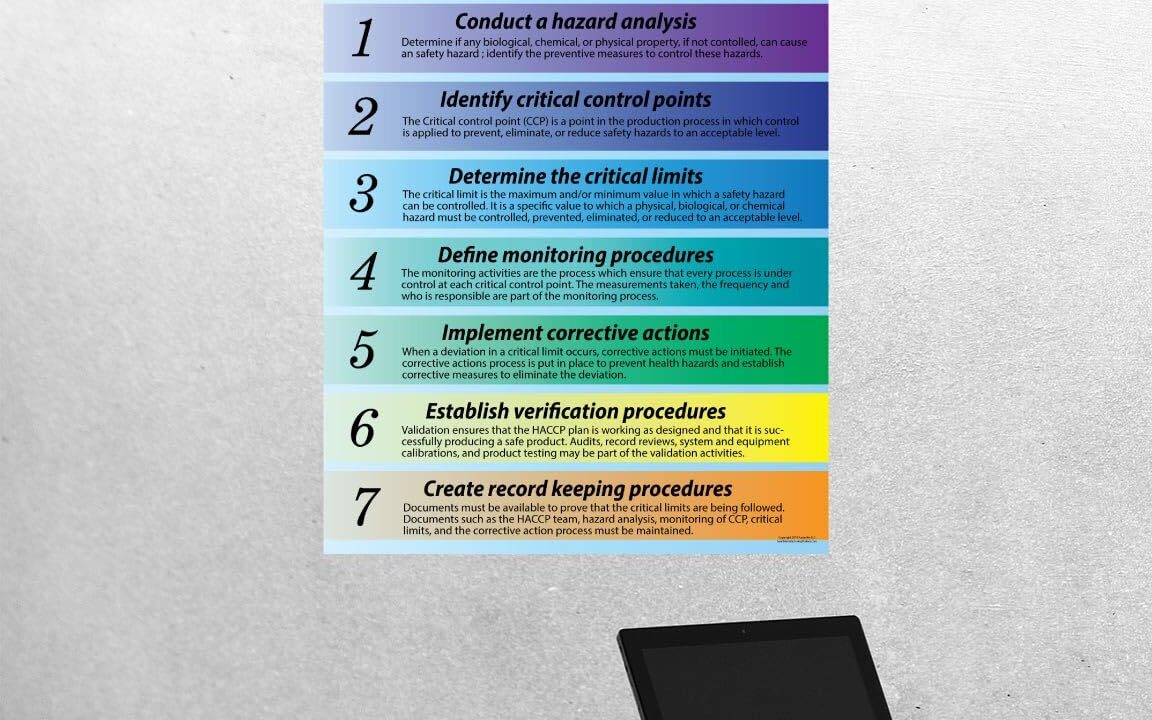
4. Quick Reference: All 7 HACCP Principles at a Glance
| Principle | Plain English | Key Question | – | – | – |
|---|---|---|---|---|---|
| 1 | Conduct Hazard Analysis | List every biological, chemical, and physical danger | What could go wrong? | ||
| 2 | Determine CCPs | Find the points where you MUST control the hazard | Where do we stop it? | ||
| 3 | Establish Critical Limits | Set the measurable safety boundaries | What’s the safe limit? | ||
| 4 | Establish Monitoring Procedures | Check and record that limits are met | Are we in control? | ||
| 5 | Establish Corrective Actions | Know exactly what to do when things go wrong | What do we fix it? | ||
| 6 | Establish Verification Procedures | Prove the system is working | Is the system working? | ||
| 7 | Establish Documentation | Write everything down | Can we prove it? |
5. How the 7 Principles Connect to FSSAI’s Schedule 4 Requirements
FSSAI Schedule 4specifically Part III (Hygienic and Sanitary Practices for Food Business Operators)is built on HACCP principles, even though it doesn’t always use the same language.
Here’s how the 7 principles map to Schedule 4:
Schedule 4, Part III, Clause 1 (Location & Surroundings): Links to Principle 1the physical environment is a source of biological hazards (pests, contamination).
Schedule 4, Part III, Clause 3 (Control of Operation): Directly requires a HACCP-based approach. Quote: ”The FBO shall identify steps in its activities which are critical to food safety”this is Principles 1, 2, and 3.
Schedule 4, Part III, Clause 4 (Product Information & Traceability): Aligns with Principle 7documentation and record keeping for traceability.
Schedule 4, Part III, Clause 6 (Training): Links to Principle 6verification through trained, competent personnel.
Schedule 4, Part III, Clause 9 (Recall Procedure): Requires corrective action proceduresPrinciple 5.
Schedule 4, Part III, Clause 10 (Audit): Directly requires verificationPrinciple 6.
> Practical advice: When preparing for an FSSAI inspection, don’t present your HACCP documentation as a “separate thing.” Show the inspector how your HACCP plan implements Schedule 4 requirements. Inspectors appreciate seeing the connectionit demonstrates you understand the intent, not just the checklist.
6. Frequently Asked Questions About the 7 HACCP Principles
Q1: What is the difference between a CCP and a PRP?
A Critical Control Point (CCP) is a specific step where a control measure is essential to prevent, eliminate, or reduce a significant hazard to an acceptable level. If you lose control at a CCP, the product is potentially unsafe.
A Prerequisite Programme (PRP) is a general practice that supports the overall hygienic environmentcleaning schedules, pest control, staff hygiene, training, etc. PRPs are essential but not specific to any one process step.
Example: Cleaning the roasting drum is a PRP. The time-temperature of the roasting process is a CCP.
Our HACCP plan template includes both CCP sheets and PRP checklists.
Q2: How many CCPs should a small food business have?
There is no fixed number. A small bakery might have 2-3 CCPs (cooking temperature, metal detection, and maybe cooling). A larger spice factory might have 3-4 CCPs.
The common mistake is having too many CCPs rather than too few. If every step is a CCP, no step gets the attention it needs. Use the CCP decision tree honestly, and you’ll land on the right number.
Q3: Does FSSAI require a full HACCP plan for a basic FSSAI registration?
For basic registration (turnover up to ₹12 lakh/year), FSSAI requires compliance with Schedule 4 but doesn’t mandate a full written HACCP plan. However, implementing the 7 principleseven informallyis strongly recommended because it’s the most practical way to meet Schedule 4 requirements.
For state licences (₹12 lakh to ₹20 crore) and central licences (₹20 crore+), a documented HACCP-based system is effectively expected during inspection.
Q4: What are the most common HACCP mistakes Indian FBOs make?
1. Copying a plan from the internet without adapting it to the specific process. Every facility is different.
2. Not validating critical limits. Using “80°C” because a competitor uses it, without proving it works for your product and equipment.
3. Skipping corrective action records. The attitude of “we fixed it, why document it?” is audit death.
4. No CCP monitoring during night shifts. Or on Sundays. Food safety doesn’t take holidays.
5. Treating HACCP as a one-time document. HACCP is a living systemit changes when your process, equipment, or products change.
Q5: Can HACCP be implemented without certification?
Absolutely. Many Indian food businesses operate safely with an internally developed HACCP plan without third-party certification. FSSAI does not require ISO 22000 or FSSC 22000 certificationit requires a HACCP-based system.
Certification adds credibility, especially for exporters or suppliers to large retailers. But the 7 principles work whether or not you pursue certification.
You can read more about certification pathways here: HACCP Certification in India 2026A Complete Guide.
Q6: How often should the HACCP plan be reviewed?
At minimum, annually. But trigger a review whenever:
– You introduce a new product or change a recipe
– You install new equipment or modify a process line
– You change a supplier (especially for key raw materials)
– You receive a customer complaint linked to food safety
– There’s a regulatory change (e.g., FSSAI amends Schedule 4)
– The annual verification finds systemic issues
A HACCP plan that hasn’t been reviewed in 2+ years is a liability, not a safety system.
Q7: What’s the difference between HACCP Principles and Pre-Requisite Programmes (PRPs)?
Great question. The 7 HACCP principles focus specifically on process-level hazardswhat happens in your production line. PRPs cover the supporting environment:
PRPs include: Pest control, cleaning and sanitation (SSOPs), personal hygiene, training, maintenance, waste management, supplier control, traceability.
HACCP includes: The 7 principles applied to your specific process from raw material to finished product.
Both are required. PRPs come first (you can’t implement HACCP in a dirty kitchen). Then HACCP builds on top of the PRP foundation.
7. Conclusion: HACCP Is Not a Paper ExerciseIt’s Your Business’s Safety Net
HACCP turned 65 this year, and its 7 principles are more relevant than ever. For Indian food businesses, understanding and applying these principles is no longer optionalit’s a regulatory requirement, a competitive advantage, and most importantly, a moral obligation to everyone who eats your food.
Start with these three actions today:
1. Walk your production line and write down every step (like our spice factory example). You can’t analyse hazards you haven’t listed.
2. Apply the CCP decision tree honestly. Not every step needs to be a CCPbut the ones that are need your full attention.
3. Document everything. Start today. The record you start now will be the evidence that saves your business during an audit.
🎁 Free Resource: HACCP Principles Cheat Sheet PDF
Get our downloadable HACCP Principles Cheat Sheeta one-page visual reference with all 7 principles, the CCP decision tree, critical limit reference values, and monitoring frequency guidelines. Perfect for training your team or pinning up on the production floor.
[Download the HACCP Cheat Sheet PDF →] (Add your lead magnet link here)
Related articles on FoodTechPro.co.in:
– [HACCP Plan Template for Indian Food Businesses](/haccp-plan-template-india/)Ready-to-use templates with CCP sheets, monitoring logs, and corrective action forms
– [HACCP Certification in India 2026A Complete Guide](/haccp-certification-india-2026/)Certification pathways, costs, and step-by-step process for ISO 22000, FSSC 22000, and BRCGS
– [FSSAI Schedule 4 Compliance Checklist](/food-safety/fssai-schedule-4/)Ensure your facility meets Indian regulatory requirements
This article was last updated in June 2026. HACCP standards and FSSAI requirements may change. Always refer to the latest Codex Alimentarius General Principles of Food Hygiene (CXC 1-1969) and the current FSSAI regulations for your specific food category.

Prashant Chavhan
Prashant Chavhan is a food technologist and industry consultant based in India, specializing in FSSAI compliance, food safety management systems (HACCP/ISO 22000), and food processing business setup. With years of hands-on experience in the Indian food industry, he founded FoodTechPro.co.in to bridge the gap between regulatory requirements and practical implementation for food entrepreneurs and professionals.