
Food Safety Audit Checklist 2026: 40+ Points for HACCP & ISO 22000 Compliance
Author: Prashant Chavhan | Last Updated: June 2026 | Category: Food Safety & Compliance
🚨 The Reality: Audit Failure Is Costlier Than Preparation
In 2025, over 34% of Indian food processing units failed their first regulatory or certification auditnot because their food was unsafe, but because their documentation and traceability systems weren’t audit-ready.
A failed audit can mean:
– ₹10–50 lakh in corrective action costs for medium processors
– 3–6 months of delayed certification (lost B2B contracts)
– Regulatory shutdown notices from FSSAI
– Loss of retail and export buyers who require current GFSI-recognised certification
The difference between panic and confidence on audit day? A prepared checklist that’s been run through your facility at least once before the auditor walks in.
This guide gives you exactly thata 40+ point food safety audit checklist built for HACCP, ISO 22000:2018, FSSAI, and BRCGS audits in the Indian food industry.
📖 What Is a Food Safety Audit?
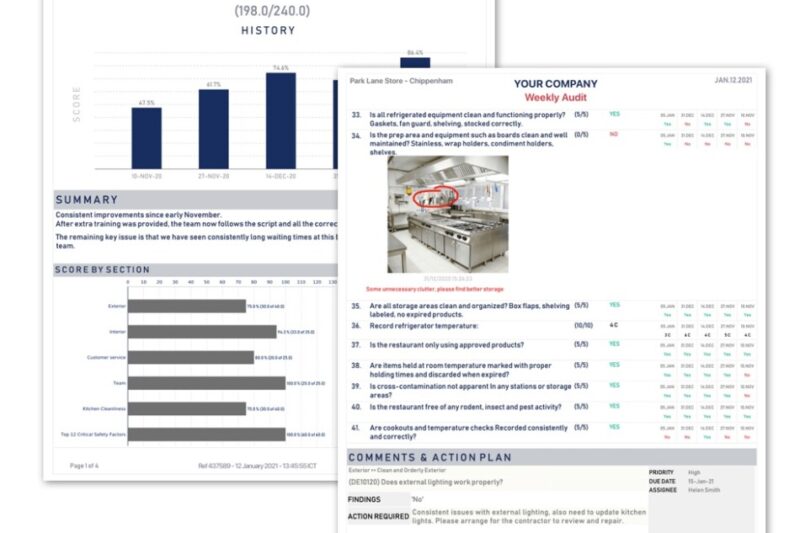
A food safety audit is a systematic, independent examination of your food safety management system (FSMS) to verify that:
1. You’re following your documented procedures
2. Your procedures meet regulatory and certification standards
3. Your team is competent and trained
4. Your facility and equipment are hygienic and well-maintained
Types of Food Safety Audits
| Audit Type | Conducted By | Purpose | Frequency |
|---|---|---|---|
| Internal Audit | Your own trained team or hired consultant | Identify gaps before external audits; continuous improvement | Quarterly or bi-annual |
| External (Second-Party) | Customer/ buyer’s auditor | Supplier approval; verify compliance with buyer requirements | Annual or per contract |
| Regulatory Audit | FSSAI, FDA, or local food authority | Legal compliance; food safety act enforcement | Unannounced or annual |
Understanding which audit you’re facing is the first stepbut the preparation framework is largely the same. to the checklist.
✅ The 40+ Point Food Safety Audit Checklist
🏭 1. Facility & Infrastructure (7 Points)
A facility that looks clean but has structural issues will still fail. Auditors inspect every surface, joint, and drain.
– [ ] 1.1 Layout & ZoningFacility layout clearly separates raw processing, cooked/ ready-to-eat zones, and storage. No cross-flow of raw and finished product pathways.
– [ ] 1.2 Flooring & DrainsFloors are sealed, non-porous, sloped (minimum 1:100 gradient) for drainage. Drains are trapped, cleanable, and free of standing water.
– [ ] 1.3 Walls & CeilingsWalls have smooth, washable surfaces up to at least 2 metres. Ceilings are sealed with no flaking paint, exposed pipes (drip risk), or pest harbourage points.
– [ ] 1.4 LightingAdequate illumination (minimum 500 lux in inspection areas, 200 lux in general production). All fixtures are shatter-proof or covered.
– [ ] 1.5 VentilationSteam, fumes, and heat are extracted effectively. No condensation dripping on product or equipment. Air filters are on a replacement schedule.
– [ ] 1.6 Pest Control InfrastructureAll openings sealed; doors have self-closers with gap-free seals; windows have mesh screens; air curtains functional at loading bays.
– [ ] 1.7 Waste ManagementWaste is segregated (wet/dry, recyclable/hazardous), stored in covered bins, and removed daily. Waste storage area is separate from production.
👕 2. Personnel Hygiene (5 Points)
People are the single biggest contamination vector. An auditor will watch your team as much as they read your documents.
– [ ] 2.1 Uniforms & PPEAll production staff wear clean uniforms, hairnets (full beard nets where applicable), and appropriate footwear. No jewellery, watches, or nail polish.
– [ ] 2.2 Handwashing ComplianceHandwash stations are accessible, stocked with soap and sanitiser, and fitted with non-hand-operated taps (elbow, knee, or sensor). Handwashing signs posted in local languages.
– [ ] 2.3 Health & Fitness ChecksDaily health declaration or screening in place. Staff with cuts, infections, gastrointestinal illness, or fever are excluded from production areas.
– [ ] 2.4 Training RecordsCurrent, signed training records exist for every employee covering: personal hygiene, GMP, allergen awareness, CCP monitoring, and their specific job roles.
– [ ] 2.5 Visitor & Contractor PolicyVisitors and contractors sign in, wear protective clothing, and are accompanied at all times. Logs are maintained and available.
📦 3. Receiving & Storage (5 Points)
Your first defence against contaminated raw materials.
– [ ] 3.1 Receiving Inspection ProtocolEvery incoming lot is inspected per a documented specification (organoleptic checks, temperature, packaging integrity, shelf life remaining). Rejected lots are segregated immediately.
– [ ] 3.2 FIFO / FEFO RotationStock rotation follows First-Expiry-First-Out (FEFO) or First-In-First-Out (FIFO). Physical shelf tags, colour coding, or digital WMS in place. Auditor will challenge your team on this.
– [ ] 3.3 Temperature & Environment LogsChillers (0–5°C), freezers (−18°C or lower), and ambient stores (temperature and humidity) are logged at least twice daily. Alarms calibrated and tested.
– [ ] 3.4 Allergen SegregationDesignated storage areas for major allergens (peanuts, tree nuts, milk, egg, soy, wheat, sesame, celery, mustard, sulphites, crustaceans, fish, molluscs). No cross-contact risk in shared storage.
– [ ] 3.5 Chemical StorageCleaning chemicals, sanitisers, lubricants, and pesticides stored in a locked, ventilated roomphysically separated from food, packaging, and ingredients. MSDS sheets available.
🔪 4. Processing & Production (6 Points)
This is where most critical control points (CCPs) operate. Auditors will probe deep.
– [ ] 4.1 CCP MonitoringAll CCP limits (temperature, time, metal detection, pH, Aw, chlorine level) are monitored at defined frequencies. Monitoring records are current, signed, and reviewed by a HACCP-trained supervisor.
– [ ] 4.2 Recipe & Formulation AdherenceProduction matches the approved formula/ recipe specification. Any deviation is documented through a formal change control or deviation procedure.
– [ ] 4.3 Metal Detection / X-Ray / MagnetsWhere applicable, metal detectors (ferrous, non-ferrous, stainless steel) are positioned post-packaging. Reject devices tested with known test pieces every hour. Calibration records available.
– [ ] 4.4 Cooking / Thermal Processing LogsCore temperature achieved and recorded for all cook steps (e.g., poultry ≥ 74°C, ready meals ≥ 72°C for 2 minutes or equivalent lethality). Time-temperature data loggers reviewed daily.
– [ ] 4.5 Cooling RatesCooling from cooking temperature to refrigeration temperature is within approved time limits (e.g., 60°C to 10°C within 2 hours or per validated schedule). Logged and reviewed.
– [ ] 4.6 Cross-Contamination ControlsColour-coded utensils and chopping boards (raw meat vs. cooked vs. produce vs. allergens). Separate production scheduling or dedicated equipment for high-risk and allergen-containing products.
🧼 5. Cleaning & Sanitation (4 Points)
Sanitation is verifiable, not just visible.
– [ ] 5.1 Sanitation Standard Operating Procedures (SSOPs)Written SSOPs exist for every piece of equipment and area. They specify: pre-rinse, detergent concentration, contact time, rinse, sanitiser concentration, contact time, and post-sanitation rinse if required.
– [ ] 5.2 Cleaning SchedulesA master sanitation schedule covers daily, weekly, and monthly tasks. Assignments are signed off, and missed tasks are escalated.
– [ ] 5.3 Chemical Concentration LogsDetergent and sanitiser concentrations are verified (using titration strips or auto-dosing logs) at the start and during cleaning. Records kept for at least 6 months.
– [ ] 5.4 Verification Swabs & ATP TestsPost-sanitation verification (ATP bioluminescence, allergen swabs, or microbial swabs) is conducted on a defined rotating schedule. Results are trended and corrective actions documented for failures.
📋 6. Documentation & Records (6 Points)
This is where most Indian food businesses lose marks. You can have perfect hygiene but if your records are missing, the audit is a fail.
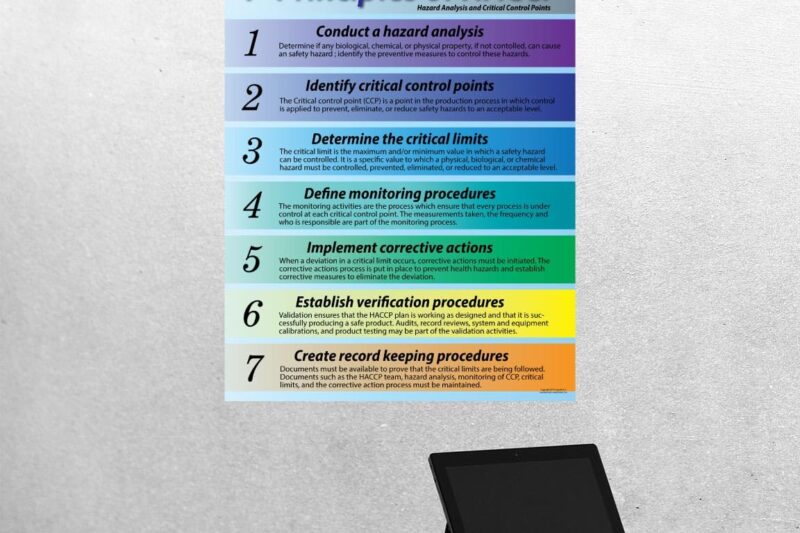
– [ ] 6.1 HACCP / FSMS PlanA current, signed HACCP plan (or ISO 22000 FSMS manual) that includes: product description, process flow diagram (verified on-site), hazard analysis, CCP identification, critical limits, monitoring procedures, corrective actions, and verification activities.
– [ ] 6.2 Corrective & Preventive Action (CAPA)All deviations, non-conformities, and complaints have root-cause analysis, corrective action, verification of effectiveness, and closure within defined timelines.
– [ ] 6.3 Calibration RecordsAll monitoring and measuring equipment (thermometers, probes, metal detectors, scales, pH metres) are calibrated against traceable standards. Calibration schedule, certificates, and labels are current.
– [ ] 6.4 Supplier Approval & MonitoringApproved supplier list, supplier questionnaires, audits, or certificates of analysis. Incoming material risk-rating and periodic re-evaluation.
– [ ] 6.5 Personnel Training MatrixA master training matrix showing who is trained on what, training dates, re-training due dates, and competency verification results.
– [ ] 6.6 Recall & Crisis Management PlanA documented, tested recall plan with clear roles, notification templates, and a communication tree. Last mock recall test report available.
🐀 7. Pest Control (3 Points)
Pest control is a universal audit focus. A single live pest sighting can end the audit.
– [ ] 7.1 Pest Control Contract & IPM PlanA valid contract with a licensed pest control operator (PCO). An Integrated Pest Management (IPM) plan covers rodents, insects, birds, and stored-product pests.
– [ ] 7.2 Bait Station Maps & LogsSite map showing all bait stations, pheromone traps, insect light traps (ILTs), and bird spikes. Stations are numbered, tamper-proof, serviced monthly (or per frequency), and logged.
– [ ] 7.3 Trend Analysis & Corrective ActionCatch data from all devices is trended monthly. Any upward trend triggers a root-cause investigation and corrective action (sealing gaps, improving sanitation, adjusting trap density).
🔗 8. Traceability & Recall (4 Points)
Traceability is the most commonly tested system during certification audits. Auditors want proof that you can trace product from farm to fork in under 4 hours.
– [ ] 8.1 Mock Recall Test (Within 12 Months)A documented mock recall has been conducted in the last 12 months. The test demonstrated forward and backward trace in ≤ 4 hours. Results and improvement actions are recorded.
– [ ] 8.2 Lot Coding & LabellingEvery production batch has a unique lot code linking production date, shift, line, raw material lots, and finished product dispatch. Lot codes are clearly printed on primary and secondary packaging.
– [ ] 8.3 Supplier TraceabilityInward raw material lots are linked to supplier batch numbers. One-step-back traceability is verifiableauditor will pick a finished product and trace it to supplier lots.
– [ ] 8.4 Customer Complaint HandlingA documented complaint handling system with severity classification, investigation (using root-cause analysis tools like 5-Why or Fishbone), corrective actions, closure, and quarterly trend reporting.
📅 How to Prepare for an Audit in 7 Days
If your audit is next week, here’s your day-by-day sprint plan:
| Day | Focus Area | Key Activities |
|---|---|---|
| Day 1Audit Gap Analysis | Documentation & Records | Run a self-assessment against the 40-point checklist above. Identify missing records, expired training, or incomplete logs. Use the checklist as your gap tool. |
| Day 2Document Clean-Up | HACCP Plan, SOPs, Training Records | Review and date-stamp all SOPs. Update the HACCP plan if process changes occurred. Ensure all employee training files are signed and current. |
| Day 3Facility Deep Clean | Sanitation & Infrastructure | Schedule a full deep cleanwalls, floors, drains, equipment, overhead pipes. Repair any damaged surfaces, replace cracked tiles, fix leaking taps. |
| Day 4Calibration & Equipment Check | Calibration, Metal Detection, Temperature Control | Confirm all thermometers, probes, pH metres, and metal detectors are calibrated with valid certificates. Review CCP monitoring equipment functionality. |
| Day 5Traceability Drill | Mock Trace | Run an internal mock trace. Pull 3 finished product batches and trace backward to suppliers and forward to dispatch. Time it. Fix any gaps found. |
| Day 6Pre-Audit Walkthrough | Full Rehearsal | Walk through every production area, cold store, dry store, waste area, and chemical store with the checklist. Interview 2–3 staff on their CCP responsibilities. |
⚖️ Certification Audit vs Regulatory Audit vs Customer Audit
| Parameter | Certification Audit (HACCP / ISO 22000 / BRC) | Regulatory Audit (FSSAI / FDA) | Customer Audit (Second-Party) |
|---|---|---|---|
| Focus | FSMS compliance against a published standard | Legal compliance; food adulteration, labelling, hygiene | Buyer-specific requirements; quality, food safety, social compliance |
| Duration | 2–5 days (depending on scope) | 1–2 days typically | 1 day, sometimes unannounced |
| Notice Period | Scheduled (initial & surveillance) | Can be unannounced or short notice | Usually scheduled per contract; some unannounced |
| Documents Required | Entire FSMS; all records for ≥12 months | Licences, lab reports, packaging/labelling, cleanliness logs | Variesoften focuses on specific risk areas (allergens, microbiology, audits) |
| Outcome | Certificate issued / non-conformities (minor/major) to close | Compliance notice, improvement notice, or prosecution | Approved / conditionally approved / rejected supplier status |
❌ Top 10 Common Audit Non-Conformities (and How to Fix Them)
Based on audit data from FSSAI, BRC, and ISO 22000 surveillance reports, here are the most frequent findings:
| Non-Conformity | % of Audits | How to Fix | – |
|---|---|---|---|
| 1 | Incomplete or missing CCP monitoring records | 68% | Implement daily review of CCP logs by a trained supervisor. Use digital checklists with mandatory fields. |
| 2 | Calibration not current or traceable | 62% | Set a monthly calibration schedule. Tag all equipment. Keep a master calibration register with certificate copies. |
| 3 | No mock recall within 12 months | 55% | Run a mock recall every 6 months. Document the exercise and improvement actions. Block 2 hours on every quarter’s calendar. |
| 4 | Handwashing facilities inadequate or unclean | 50% | Inspect every handwash station daily. Restock soap, sanitiser, towels. Repair sensor taps proactively. |
| 5 | Training records not up to date | 48% | Use a training matrix with expiry dates. Schedule refresher training before certificates expire. |
| 6 | Pest control trend analysis missing | 44% | Request monthly trend reports from your PCO. Review and sign them. Take corrective action on any upward trends. |
| 7 | No corrective action for deviations | 40% | Use a CAPA form for every deviation. Train team on root-cause analysis basics (5-Why, Fishbone). |
| 8 | Allergen cross-contact risk not assessed | 36% | Do a full allergen risk assessment. Implement cleaning validation between allergen and non-allergen production. |
| 9 | Cleaning verification (ATP/swabs) not performed | 32% | Invest in an ATP luminometer or arrange microbial swab testing on a rotating schedule. Trend and review results. |
| 10 | Traceability not demonstrated within required time | 30% | Run traceability exercises quarterly, not annually. Aim for 4-hour completion. Document and improve. |
📁 Audit Documentation ChecklistWhat to Have Ready at Audit Time
On audit day, have these documents (physical or digital) ready in a dedicated audit binder or folder:
– [ ] Company registration, FSSAI licence, GST certificate, factory licence
– [ ] HACCP plan / ISO 22000 FSMS manual (signed, current)
– [ ] Process flow diagram (verified and dated ≤ 1 year ago)
– [ ] Approved supplier list with latest approval dates
– [ ] Incoming material inspection records (last 6 months)
– [ ] Temperature monitoring logs (chillers, freezers, cooking, cooling)
– [ ] Calibration register + certificates (all equipment in scope)
– [ ] Master training matrix + individual training files
– [ ] Pest control contract, IPM plan, bait station map, service logs, trend reports
– [ ] Cleaning schedules, SSOPs, chemical concentration logs, ATP/swab results
– [ ] Corrective action (CAPA) records from last 12 months
– [ ] Mock recall report (within last 12 months)
– [ ] Customer complaint log + investigation records
– [ ] Internal audit reports + closure of findings
– [ ] Management review meeting minutes (as per standard requirement)
❓ FAQFood Safety Audit in India
##
1. What is the difference between HACCP and ISO 22000?
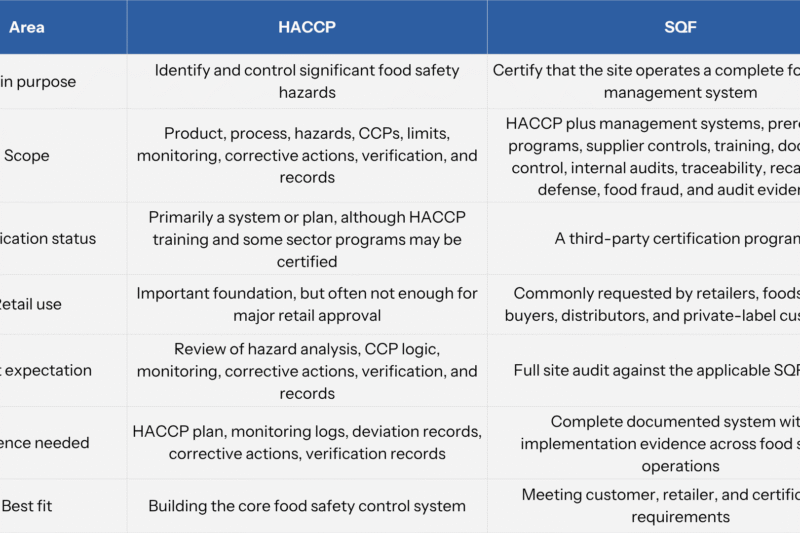
HACCP is a hazard-based preventive system focused on CCPs. ISO 22000 is a full FSMS standard that includes HACCP principles and adds management system requirementscommunication, leadership, resource management, performance evaluation, and continual improvement. [Read more →](/haccp-certification-india-2026/)
##
2. How much does a food safety audit cost in India?
Internal audits cost ₹10,000–₹30,000 per day (consultant). Certification audits varyISO 22000 certification in India ranges from ₹75,000–₹2,50,000 depending on company size, scope, and certification body. [See ISO 22000 costing →](/iso-22000-certification-india-2026/)
##
3. Who can conduct a food safety audit in India?
Internal audits can be done by your own trained team or hired food safety consultants. Certification audits must be conducted by FSSAI-recognised or GFSI-recognised certification bodies (e.g., DNV, SGS, BSI, Intertek, TÜV, LRQA, Bureau Veritas).
##
4. What documents do I need for an FSSAI audit?
FSSAI audits typically require: FSSAI licence/registration, product list with labels, water testing report, pest control records, waste disposal records, staff medical certificates, and cleaning logs. FSSAI audits increasingly check traceability and recall capability too.
##
5. How long does it take to prepare for a food safety audit?
With a prepared system, 2–4 weeks is realistic for a first certification audit. For annual surveillance audits, 1–2 weeks of focused preparation is usually sufficientespecially if you’ve maintained your systems year-round.
##
6. Can I do a HACCP audit without ISO 22000 certification?
Yes. HACCP is the core set of principles. Many buyers accept a standalone HACCP certification (based on Codex Alimentarius) without ISO 22000. However, ISO 22000 adds credibility and is increasingly expected by large retailers and export markets.
##
7. What happens if I fail an audit?
You’ll receive a formal report of non-conformities. Minor issues can usually be closed within 30 days. Major non-conformities require re-audit. FSSAI failures can result in suspension, fines, or prosecution. Certification audit failures delay certification until corrective actions are verified.
##
8. How often should I run internal audits?
At least quarterly or bi-annually (as per your FSMS procedure). Export-oriented and high-risk processors often run monthly internal audits. The key is to treat internal audits as improvement tools, not just compliance exercises.
🎯 Conclusion: Your Audit Is Only as Strong as Your Last Checklist
A food safety audit isn’t something to fearit’s a structured verification that your systems are working. The difference between a clean audit and a finding-ridden one is almost always preparation, not facility size or budget.
Here’s your action plan:
1. Download the Food Safety Audit Checklist PDFrun through it this week
2. Fix the top 5 non-conformities firstincomplete records, calibration, training, mock recall, pest trends
3. Run a mock traceability exerciseit’s the single most revealing test of your system
4. Build a quarterly internal audit habitdon’t wait for the certification body to find gaps
👉 Get the complete Food Safety Audit Checklist PDFready-to-use for your next HACCP, ISO 22000, or FSSAI audit.
Written by Prashant Chavhan for FoodTechPro.co.in. Prashant has worked with over 50 Indian food businesses on HACCP and ISO 22000 implementation. This guide was last updated in June 2026.
Related Articles:
– [HACCP Certification in India 2026: A Complete Guide](/haccp-certification-india-2026/)
– [ISO 22000 Certification in India 2026: Step-by-Step Process & Cost](/iso-22000-certification-india-2026/)
📄 FAQPage JSON-LD
“`json
{
“@context”: “https://schema.org”,
“@type”: “FAQPage”,
“mainEntity”: [
{
“@type”: “Question”,
“name”: “What is the difference between HACCP and ISO 22000?”,
“acceptedAnswer”: {
“@type”: “Answer”,
“text”: “HACCP is a hazard-based preventive system focused on Critical Control Points. ISO 22000 is a full Food Safety Management System standard that incorporates HACCP principles and adds management system requirements including leadership, resource management, performance evaluation, and continual improvement.”
}
},
{
“@type”: “Question”,
“name”: “How much does a food safety audit cost in India?”,
“acceptedAnswer”: {
“@type”: “Answer”,
“text”: “Internal audits cost ₹10,000–₹30,000 per day. ISO 22000 certification in India ranges from ₹75,000–₹2,50,000 depending on company size, scope, and certification body.”
}
},
{
“@type”: “Question”,
“name”: “Who can conduct a food safety audit in India?”,
“acceptedAnswer”: {
“@type”: “Answer”,
“text”: “Internal audits can be done by trained in-house teams or food safety consultants. Certification audits must be conducted by FSSAI-recognised or GFSI-recognised certification bodies such as DNV, SGS, BSI, Intertek, TÜV, LRQA, or Bureau Veritas.”
}
},
{
“@type”: “Question”,
“name”: “What documents do I need for an FSSAI audit?”,
“acceptedAnswer”: {
“@type”: “Answer”,
“text”: “FSSAI audits typically require: FSSAI licence/registration, product list with labels, water testing report, pest control records, waste disposal records, staff medical certificates, and cleaning logs. FSSAI now also checks traceability and recall capability.”
}
},
{
“@type”: “Question”,
“name”: “How long does it take to prepare for a food safety audit?”,
“acceptedAnswer”: {
“@type”: “Answer”,
“text”: “A first certification audit requires 2–4 weeks of preparation with a prepared system. For annual surveillance audits, 1–2 weeks of focused preparation is usually sufficient if systems have been maintained year-round.”
}
},
{
“@type”: “Question”,
“name”: “Can I do a HACCP audit without ISO 22000 certification?”,
“acceptedAnswer”: {
“@type”: “Answer”,
“text”: “Yes. HACCP is the core set of principles based on Codex Alimentarius, and many buyers accept standalone HACCP certification. However, ISO 22000 adds credibility and is increasingly expected by large retailers and export markets.”
}
},
{
“@type”: “Question”,
“name”: “What happens if I fail an audit?”,
“acceptedAnswer”: {
“@type”: “Answer”,
“text”: “You receive a formal non-conformity report. Minor issues can be closed within 30 days. Major non-conformities require re-audit. FSSAI failures can result in suspension, fines, or prosecution. Certification audit failures delay certification until corrective actions are verified.”
}
},
{
“@type”: “Question”,
“name”: “How often should I run internal audits?”,
“acceptedAnswer”: {
“@type”: “Answer”,
“text”: “At least quarterly or bi-annually as per your FSMS procedure. Export-oriented and high-risk processors often run monthly internal audits. The key is to treat internal audits as improvement tools, not just compliance exercises.”
}
}
]
}
“`
This article was originally published on FoodTechPro.co.in. © 2026 Prashant Chavhan. All rights reserved.

Prashant Chavhan
Expert writer covering food technology, food safety, and industry innovations.