![HACCP Plan Template: Free 7-Step Implementation Guide [Download]](https://foodtechpro.co.in/wp-content/uploads/2026/06/ftpro-09-950x720.jpg)
HACCP Plan Template: Free 7-Step Implementation Guide [Download]
If you run a food business in Indiaa bakery in Pune, a spice-packing unit in Kochi, a dairy plant in Gujarat, or a ready-to-eat snack line in Delhiyou’ve likely heard the acronym HACCP (pronounced has-sip).
Here’s the short version of why it matters:
FSSAI demands it. The Food Safety and Standards Authority of India requires every licensed food business operator to implement a food safety management system built on HACCP principles. Without a written plan, your license renewalor new applicationhits a wall.
Global buyers demand it. If you export, your customer will almost certainly ask for your HACCP plan before placing the first order. Retail chains, importers, and food service companies worldwide treat a HACCP plan as table stakes.
Auditors love itand so will you. A well-structured HACCP plan turns a chaotic recall scenario into a calm, documented response. It protects your brand, your customers, and your bottom line.
But here’s the problem most Indian food businesses face: Where do you start?
The Codex Alimentarius lays out 12 logical steps and 7 principles. That’s a lot of theory. What you actually need is a practical, plug-and-play HACCP plan template that you can adapt to your product, your facility, and your team size.
That’s exactly what this guide delivers. Download the free template below, follow the step-by-step implementation guide, and build a compliance-ready HACCP plan in daysnot months.
📥 Free HACCP Plan Template (Word + PDF)
[👉 Download the Free HACCP Plan Template Now →]()
Includes:
– Cover page with document control
– HACCP team & scope template
– Product description forms
– Process flow diagram guide
– Hazard analysis worksheet (with examples)
– CCP decision tree
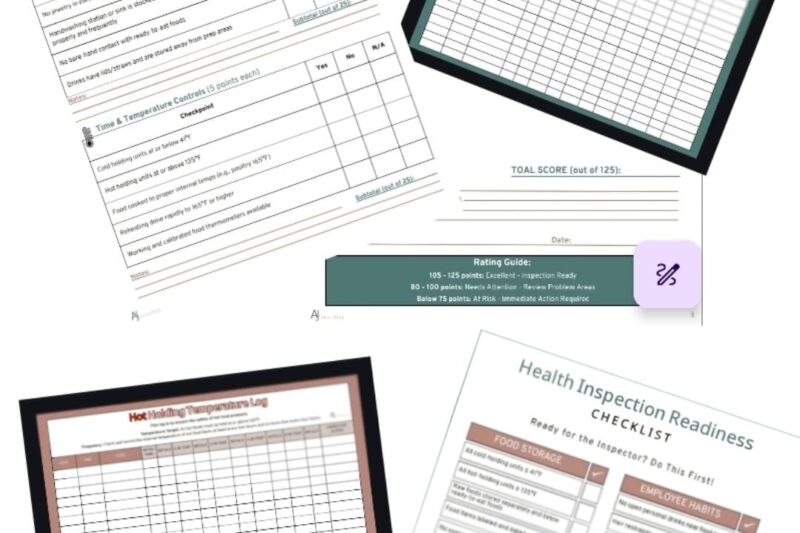
– Monitoring & corrective action logs
– Verification schedule
– Record-keeping templates
What is a HACCP Plan?
A HACCP plan is a written document that identifies food safety hazardsbiological, chemical, and physicalat each step of your production process and specifies how to control them. It is:
– Product-specific: Different products have different hazards. A paneer plan differs from a pickle plan.
– Process-specific: Your unique equipment, layout, and workflow determine where controls are needed.
– Science-based: Each control point is backed by datatemperature thresholds, pH limits, aw (water activity) levels, etc.
– Living document: It evolves with your product, equipment, and regulatory landscape.
Anatomy of a HACCP Plan Document
| Section | Purpose |
|---|---|
| Cover Page & Document Control | Plan ID, version, approval date, review schedule |
| HACCP Team | Names, roles, and qualifications of team members |
| Product Description | Ingredients, packaging, shelf life, storage, intended use |
| Process Flow Diagram | Step-by-step visual of production from raw material to dispatch |
| Hazard Analysis Table | Identified hazards, severity, likelihood, control measures |
| CCP Determination | Using the Codex decision tree to identify Critical Control Points |
| CCP Control Table | Critical limits, monitoring, corrective actions, verification |
| Verification Procedures | Validation methods, audit schedule, calibration records |
Why You Need a Written HACCP Plan
1. FSSAI Mandate
Under the Food Safety and Standards Act, 2006, all food business operators (FBOs) in India must implement a food safety management system based on HACCP principles. While the depth of documentation varies by business size (Schedule 4 of FSSAI Regulations spells this out), every licensed FBO needs some form of written plan.
→ Related: [FSSAI License Renewal 2026: Complete Guide](/fssai-license-2026/)
2. Export Requirement
If you export to the EU, USA, UAE, Japan, Singapore, or Australia, a validated HACCP plan is non-negotiable. The Export Inspection Council (EIC) of India mandates HACCP for:
– Fish & fishery products
– Meat & poultry
– Dairy products
– Egg products
– Honey
– Ready-to-eat foods
3. Audit & Certification Readiness
Major certificationsBRCGS, IFS, FSSC 22000, SQF, ISO 22000all require a documented HACCP plan. Even if you’re not pursuing certification, most retailer and food service audits (think McDonald’s, Domino’s, or BigBasket) will ask for it.
→ Related: [HACCP Certification in India 2026: Types, Cost & Process](/haccp-certification-india-2026/)
4. Legal Protection
In the event of a food safety incident, a documented HACCP plan demonstrates due diligence. It proves you identified hazards, implemented controls, and maintained recordscritical evidence in consumer complaints or regulatory action.
The 12 Codex Steps to Develop a HACCP Plan
The Codex Alimentarius defines 12 logical steps that combine into a complete HACCP system development process.
| Step | Activity | Principle |
|---|---|---|
| 1 | Assemble the HACCP team | |
| 2 | Describe the product | |
| 3 | Identify intended use | |
| 4 | Construct the flow diagram | |
| 5 | On-site verification of flow diagram | |
| 6 | List all potential hazards | Principle 1 |
| 7 | Determine CCPs | Principle 2 |
| 8 | Establish critical limits for each CCP | Principle 3 |
| 9 | Establish monitoring system | Principle 4 |
| 10 | Establish corrective actions | Principle 5 |
| 11 | Establish verification procedures | Principle 6 |
Let’s walk through each:
Step 1: Assemble the HACCP TeamInclude representatives from production, quality control, maintenance, and management. If you’re a micro-business, this may be just 2–3 people with external guidance.
Step 2: Describe the ProductDocument product name, ingredients, additives, packaging type, shelf life, storage conditions, and distribution method.
Step 3: Identify Intended UseWho will consume the product? General public? Infants? Elderly? Immunocompromised? This affects hazard assessment.
Step 4: Construct the Flow DiagramMap every step from raw material receipt to dispatch. Include storage, processing, cooling, packing, and distribution.
Step 5: On-Site VerificationWalk the production line and confirm the flow diagram matches reality. This step catches undocumented rework loops, temporary storage, or split flows.
Steps 6–12 follow the 7 HACCP Principles detailed below.
The 7 HACCP Principles Applied
Here’s how each principle translates into practical action, with a sample table for each.
Principle 1: Conduct a Hazard Analysis
Identify biological (Salmonella, E. coli, Listeria), chemical (aflatoxins, cleaning residues, allergens), and physical (metal, glass, plastic) hazards at each process step.
Sample: Hazard Analysis for Garam Masala Blend
| Process Step | Hazard Type | Hazard Description | Severity | Likelihood | Control Measure |
|---|---|---|---|---|---|
| Raw Material Receipt | Chemical | Aflatoxin in whole spices | High | Medium | Supplier COA, visual inspection, random lab testing |
| Grinding | Physical | Metal fragments from burr wear | Medium | Medium | Metal detector at end of line; magnet at grinder discharge |
| Mixing | Biological | Salmonella cross-contamination | High | Low | Batch segregation; sanitised equipment between allergen batches |
Principle 2: Determine Critical Control Points (CCPs)
Use the Codex decision tree for each significant hazard identified in Principle 1. A CCP is a step where control is essential to prevent or eliminate a hazard.
Principle 3: Establish Critical Limits
Each CCP must have measurable critical limitstemperature ≥72°C, pH ≤ 4.6, aw ≤ 0.85, metal detector sensitivity ≥ 1.5 mm ferrous, etc.
Principle 4: Establish Monitoring Procedures
Define what to monitor, how, how often, and who monitors.
Sample: Monitoring Schedule for Garam Masala
| CCP | Parameter | Method | Frequency | Responsible |
|---|---|---|---|---|
| Metal Detection | Ferrous ≥ 1.5 mm / Non-ferrous ≥ 2.0 mm | Test with certified test strips | Every 30 min & start/end of batch | Production Supervisor |
Principle 5: Establish Corrective Actions
Define what happens when a critical limit is breached. Who decides? What happens to affected product? When does re-validation occur?
Sample: Corrective Actions
| Deviation | Immediate Action | Product Disposition | Root Cause Investigation |
|---|
Principle 6: Establish Verification Procedures
Validation of the plan itselfCCP calibration, records review, internal audits, and product testing to confirm the plan is working.
Principle 7: Establish Documentation & Record-Keeping
All monitoring records, corrective action reports, calibration certificates, and HACCP plan updates must be documented and retained for the shelf life of the product plus minimum 1 year (or as specified by FSSAI).
Sample HACCP Plan Table: Packaged Garam Masala Blend
For this guide, we’ve selected a packaged spice blend (garam masala)a high-volume product manufactured by thousands of Indian food businesses.
Process Flow
Raw Spices Receipt → Cleaning → Steam Sterilisation → Drying → Grinding → Mixing (proprietary blend) → Metal Detection → Packaging → Storage & Dispatch
CCP Identification Table
| Process Step | Hazard | Q1: Control measure exists? | Q2: Eliminate/reduce to safe level? | Q3: Contamination to unacceptable level? | Q4: Subsequent step will eliminate? | CCP? |
|---|---|---|---|---|---|---|
| Raw material receipt | Aflatoxin | Yes (supplier testing) | No | N/A | N/A | No* |
| Steam sterilisation | Salmonella, mould | Yes | Yes | N/A | N/A | CCP 1 |
| Grinding | Metal fragments | Yes (magnet + detector) | Yes | N/A | N/A | CCP 2 |
*Controlled via supplier approval program, not a CCP.
CCP Control Table
| CCP | Hazard | Critical Limit | Monitoring | Frequency | Corrective Action | Verification | Records |
|---|---|---|---|---|---|---|---|
| CCP 1: Steam Sterilisation | Pathogen survival (Salmonella, Bacillus cereus) | Steam temp ≥ 95°C; exposure ≥ 3 min | Digital temperature probe + chart recorder | Continuous; visual check every batch | Quarantine batch; re-sterilise or reject; calibrate probe | Weekly calibration of probes; quarterly validation heat distribution study | Sterilisation log; calibration certificate |
| CCP 2: Grinding | Metal fragments | Magnet cleaned every 2 hrs; grinder burr inspected weekly | Visual inspection of magnet; burr wear gauge | Every 2 hours | Replace worn burrs; clean magnet; inspect product from last 30 min | Monthly magnet strength test; burr replacement schedule | Magnet cleaning log; burr inspection sheet |
HACCP Plan Template Sections Explained
1. Cover Page & Document Control
– Document title: “HACCP Plan[Product Name]”
– Document number & revision: e.g., HACCP-GM-001, Rev 03
– Effective date & next review date
– Approval signatures (HACCP Team Leader, Plant Manager, QA Head)
2. HACCP Team & Scope
List every team member with name, designation, and HACCP training status. Define the scope: which product line, which facility, which processes.
3. Product Description
Include:
– Product name & brand
– List of ingredients with supplier codes
– Allergen declaration
– Packaging type (pouches, jars, vacuum packs)
– Net weight / pack size
– Shelf life & storage conditions (cool, dry place)
– Intended use & target consumer
– Distribution channel (retail, B2B, export)
4. Process Flow Diagram
A visual flowchart with numbered steps. Must include at least: receiving, storage, pre-processing, processing, cooling, packaging, metal detection, storage, and dispatch. Include rejection/rework loops.
5. Hazard Analysis
A comprehensive table (as shown in Principle 1 above) that lists every process step, potential hazards, assessment of risk, and justification for control measures.
6. CCP Determination
Apply the Codex decision tree. Document the reasoning for each CCP or decision to not classify a step as CCP.
7. CCP Control (HACCP Control Chart)
As shown in the CCP Control Table abovethe heart of your plan.
8. Verification Procedures
Define:
– Calibration schedule for all monitoring equipment
– Internal audit frequency
– Product testing schedule (microbiological and chemical)
– Record review protocol
– Plan re-validation triggers
9. Corrective Action Procedure
Define the hierarchy: Immediate action → Product quarantine/disposition → Root cause → Preventive action → Re-validation.
10. Record-Keeping
List all forms and logs with retention periods:
| Record | Retention |
|---|---|
| Monitoring logs (CCP 1, CCP 2, CCP 3) | Product shelf life + 12 months |
| Corrective action reports | 3 years |
| Calibration records | Life of equipment + 2 years |
| Training records | Duration of employment + 2 years |
How to Customize the Template for Your Business
The free template works across food categories. Here’s how to tailor it:
##
🍞 Bakery (bread, cakes, biscuits)
– CCPs: Metal detection (flour sieving), oven temperature (kill step), cooling time (moisture control)
– Key hazards: Physical (metal from milling equipment), biological (mould post-baking), allergen (cross-contact with nuts/dairy)
– Critical limits: Core temperature ≥ 90°C for bakery; aw ≤ 0.85 for shelf-stable products
##
🥛 Dairy (paneer, curd, milk, ghee)
– CCPs: Pasteurisation temperature/time, cooling rate, pH for fermented products
– Key hazards: Biological (Listeria, E. coli, Salmonella), chemical (antibiotic residues, cleaning chemical residues)
– Critical limits: Milk pasteurisation at 72°C for 15 seconds (HTST); pH ≤ 4.6 for fermented products
##
🥩 Meat & Poultry (fresh, frozen, ready-to-cook)
– CCPs: Chilling rate, cooking temperature, cross-contamination separation
– Key hazards: Biological (Campylobacter, Salmonella, Clostridium perfringens), physical (bone fragments)
– Critical limits: Core temp ≥ 74°C for poultry; storage temp ≤ 4°C for fresh meat
##
🥤 Beverages (juices, squashes, soft drinks)
– CCPs: Pasteurisation (if thermal), pH control (for non-thermally processed), metal detection (canning lines)
– Key hazards: Biological (yeast, mould, acid-tolerant bacteria), chemical (sanitiser residues)
– Critical limits: pH ≤ 4.5 for shelf-stable; pasteurisation at 85°C for 2 min
##
🍿 Snack Foods (namkeen, extruded snacks, roasted nuts)
– CCPs: Frying oil temperature, metal detection, moisture control (for texture & stability)
– Key hazards: Physical (metal from frying lines), chemical (acrylamide at high frying temps), biological (Salmonella in roasted nuts)
– Critical limits: Frying oil temp 160–180°C; aw ≤ 0.6 for crispy texture
Common Mistakes When Writing HACCP Plans
Even experienced food safety professionals slip up. Here are the 8 most frequent mistakes:
##
1. Copying a Generic Plan
Your HACCP plan must reflect your facility, your equipment, your product. A copied plan from the internet will fail any serious audit.
##
2. Missing the On-Site Verification of the Flow Diagram
The biggest gap: the written flow diagram doesn’t match the actual production floor. Walk the line. Document everythingespecially rework loops and temporary storage.
##
3. Confusing PRPs with CCPs
Prerequisite Programs (GMP, pest control, training, cleaning) are not CCPs. Don’t list “hand washing” as a CCP. Only critical kill/prevent steps qualify.
##
4. Setting Unrealistic Critical Limits
Critical limits must be scientifically valid and operationally achievable. Setting a temperature limit you can’t consistently maintain is setting yourself up for constant deviations.
##
5. Neglecting Allergen Hazards
FSSAI’s 2022 labelling regulations and global buyer standards require allergen control in your HACCP plan. Cross-contact at shared equipment must be assessed.
##
6. Incomplete Corrective Actions
Saying “fix the problem” is not enough. Your corrective action must include: product disposition, root cause analysis, timeline for fix, and re-validation.
##
7. No Training Records
The best HACCP plan is useless if nobody on the floor knows how to use it. Document who trained whom, on what date, covering which CCPs.
##
8. Treating It as a One-Time Document
HACCP is a living system. Review it when you change suppliers, equipment, recipes, or packaging. Schedule at least an annual review.
HACCP Plan vs HACCP Manual vs HACCP Policy
These terms are used interchangeablyincorrectly. Here’s how they differ:
| Document | Scope | Content | Audience |
|---|---|---|---|
| HACCP Policy | Organisation-wide | Statement of commitment to food safety; objectives; management responsibility | Company-wide, public-facing |
| HACCP Manual | Organisation-wide | Full food safety management system: policies, SOPs, PRPs, training, supplier management, internal audit, and references to all HACCP plans | Internal + auditors |
Example hierarchy:
– Policy: “We will manufacture safe and compliant food products.”
– Manual: Contains the Supplier Approval SOP, Cleaning SOP, and Pest Control SOP.
– Plan: For garam masalaCCP 1 is steam sterilisation at ≥95°C for ≥3 minutes.
Digital HACCP Software Options in India
Paper-based HACCP plans work, but digital HACCP software saves time, reduces errors, and makes audit preparation dramatically faster.
| Software | Best For | Key Features | Starting Price (INR) |
|---|---|---|---|
| FoodDocs | SMEs, startups | AI-powered HACCP plan builder, real-time monitoring, auto-documentation | ~₹50,000/yr |
| SafetyCulture (iAuditor) | All sizes | Mobile checklists, CCP monitoring, photo evidence, corrective action workflows | Free tier; paid ~₹15,000/yr |
| Qualtrax | Mid-large enterprises | Workflow automation, corrective action tracking, integration with ERP | Custom quote |
| Safefood 360° | Export-oriented units | FSMA compliance, supplier management, full traceability | Custom quote |
| FoodCert India | Indian SMEs | HACCP plan builder aligned with FSSAI Schedule 4; Hindi/English interface | ~₹25,000/yr |
Pro tip for small businesses: Start with SafetyCulture’s free tier or a Google Sheets-based monitoring system. Add a paid solution only when you scale or face audit frequency.
Frequently Asked Questions
##
1. What is a HACCP plan template?
A HACCP plan template is a pre-formatted document that helps food businesses develop their Hazard Analysis and Critical Control Point (HACCP) plan. It includes structured sections for product description, hazard analysis, CCP identification, critical limits, monitoring procedures, corrective actions, verification, and record-keepingall aligned with Codex Alimentarius principles.
##
2. Is a HACCP plan mandatory in India?
Yes. FSSAI mandates a HACCP-based food safety management system for all food business operators under the Food Safety and Standards Act, 2006. While a full ISO 22000 certification is optional for smaller businesses, a written plan based on HACCP principles is required for FSSAI license renewal, export registration, and compliance audits.
##
3. What are the 7 principles of HACCP?
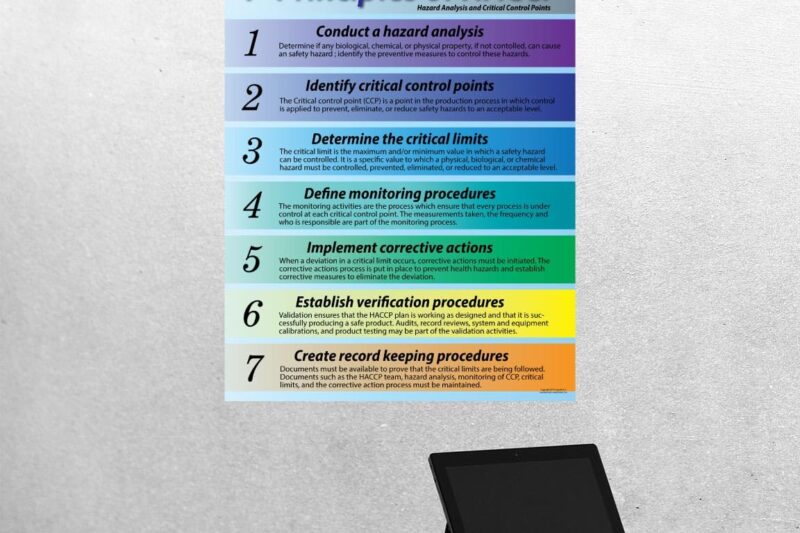
The 7 HACCP principles are: (1) Conduct a hazard analysis, (2) Determine Critical Control Points (CCPs), (3) Establish critical limits, (4) Establish monitoring procedures, (5) Establish corrective actions, (6) Establish verification procedures, and (7) Establish record-keeping and documentation procedures.
##
4. What is the difference between a HACCP plan and a HACCP manual?
A HACCP plan is product- and process-specificit covers one product line or process flow. A HACCP manual is the broader food safety management system document that includes policies, organisational structure, standard operating procedures (SOPs), and references to all HACCP plans across the business. Think of the manual as the rulebook and the plan as the playbook for a specific product.
##
5. Can a small food business implement HACCP?
Absolutely. HACCP principles are scalable. Small businesses can start with a simplified plan focusing on the most critical hazards. The Codex Alimentarius provides guidance for small and less developed businesses (SLDB). In India, FSSAI’s ‘Food Safety Management System for Small Businesses’ offers a simplified framework.
##
6. How often should a HACCP plan be reviewed?
A HACCP plan should be reviewed at least annually and whenever there is a change in: product formulation, processing equipment, raw material sources, packaging, distribution methods, or after a food safety incident. Quarterly internal reviews are considered best practice.
##
7. What is the best software for HACCP plan management in India?
Popular digital HACCP software options available in India include FoodDocs, SafetyCulture (formerly iAuditor), Qualtrax, DNV GL’s MyCare, and Safefood 360°. Indian vendors like FoodCert India and Techni-K also offer compliance software. For small businesses, Google Sheets-based templates and SafetyCulture’s free tier are cost-effective starting points.
##
8. Do exporters need a HACCP plan?
Yes, almost always. Exporters to the EU, USA, UAE, Japan, and Australia must have a validated HACCP plan. The EU Regulation 852/2004, US FDA FSMA Preventive Controls, and Codex guidelines all require a science-based HACCP system. FSSAI’s Export Inspection Council also mandates HACCP for approved export units.
Conclusion
A HACCP plan isn’t just a regulatory checkboxit’s the backbone of your food safety system. With FSSAI strengthening enforcement and global buyers demanding proof of control, a well-documented HACCP plan is no longer optional.
The good news: you don’t need a consultant or an expensive software package to start. Use the free template below, work through the 12 steps one by one, and adapt it to your product. Start with one product line. Get it right. Then expand.
📥 Download Your Free HACCP Plan Template
[👉 Download the Free HACCP Plan Template (Word + PDF) →]()
Includes:
– Ready-to-use HACCP plan template with all 7 principles
– Pre-filled examples for a packaged spice blend
– CCP decision tree flowchart
– Monitoring log templates
– Corrective action report format
– Editable in Wordno special software needed
Article by Prashant Chavhan. Last updated: June 2026.
Also read: [HACCP Certification in India 2026: Types, Cost & Process](/haccp-certification-india-2026/) | [FSSAI License Renewal 2026: Complete Guide](/fssai-license-2026/)
Disclaimer: This article provides general guidance on HACCP plan development. For product-specific hazard analysis and regulatory compliance, consult a qualified food safety professional or FSSAI-recognised food safety auditor.

Prashant Chavhan
Expert writer covering food technology, food safety, and industry innovations.