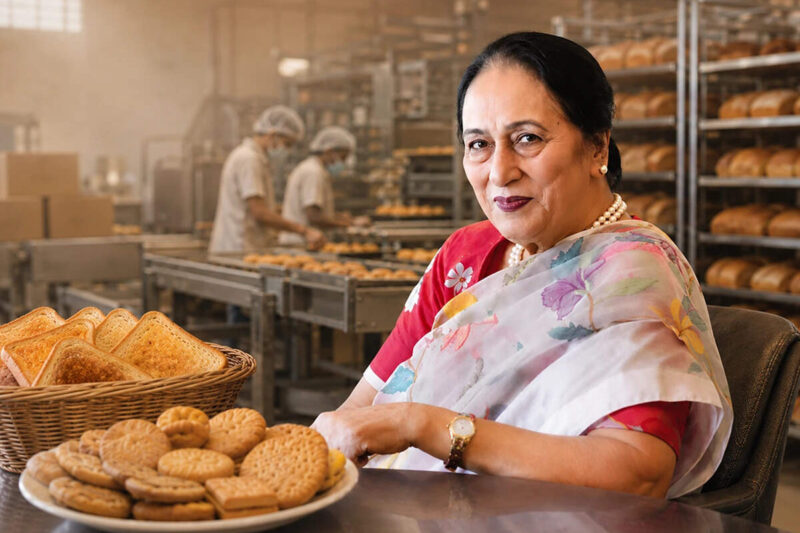
15 Food Industry Trends Shaping India’s Food Sector in 2026
The Indian food industry is transforming at a pace we’ve never seen before. Between regulatory shifts, technology disruption, and changing consumer behaviour, food businesses that don’t adapt risk being left behind.
In this guide, we break down 15 food industry trends in India for 2026 that every food manufacturer, processor, exporter, and entrepreneur needs to know. Whether you run a small food business or manage a large processing facility, these trends will shape your strategy for the year ahead.
👉 Want the full report? Download our free [2026 Food Trends Forecast (Free PDF)](#) for exclusive data, actionable checklists, and year-ahead planning templates.
Why This Matters for Indian Food Businesses
India’s food processing industry is projected to reach $535 billion by 2026 (Invest India, 2025), growing at a CAGR of 11.5%. With the government’s Production-Linked Incentive (PLI) scheme for food processing allocating ₹10,900 crore, and FSSAI rolling out its most significant regulatory overhaul in a decade, 2026 is a defining year.
| Key Metric | 2024 | 2026 (Projected) | Source |
|---|---|---|---|
| Food processing market size | $390 billion | $535 billion | Invest India |
| FSSAI licensed businesses | 3.8 lakh | 5.2 lakh+ | FSSAI Annual Report |
| Cold chain capacity (million MT) | 34.5 | 42.8 | NCCD |
to the 15 trends reshaping the sector.
Trend 1: FSSAI 2026 Amendment — Perpetual License, New Thresholds, Labelling Overhaul
FSSAI’s Food Safety and Standards (Amendment) Act, 2026 introduces the most significant regulatory changes since 2006. Key highlights:
– Perpetual licences — Food business operators (FBOs) now receive lifetime licences instead of 1–5 year renewals, reducing administrative burden.
– New thresholds — Micro-businesses (annual turnover < ₹12 lakh) are exempt from mandatory FSSAI licence; small businesses (₹12 lakh–₹12 crore) face simplified compliance.
- Front-of-pack labelling (FOPL) — Mandatory warning labels for salt, sugar, and saturated fat on packaged foods, phased in from January 2026.
– Eco-labelling — New sustainability labelling requirements for processed foods.
Why it matters: FBOs that proactively comply with FOPL and eco-labelling will gain consumer trust faster. Perpetual licences free up compliance resources but increase accountability — FSSAI can now suspend licences without renewal as a checkpoint.
> Source: FSSAI Draft Food Safety and Standards (Amendment) Act, 2026; PIB India.
Trend 2: D2C Food Brands Explosion
Direct-to-consumer (D2C) food brands are bypassing traditional retail and building digital-first relationships with Indian consumers. The Indian D2C food market is projected to hit $8.5 billion by 2026 (Redseer, 2025).
Brands leading the charge:
– Vurve (healthy snacking) — crossed ₹100 crore revenue in 2025
– The Whole Truth (clean label) — 90%+ Y-o-Y growth
– Yoga Bar (nutrition bars) — 15 million+ units sold
– Moonshine Meadery (alcoholic beverages) — fastest-growing Indian D2C alcohol brand
What’s driving this: UPI payment infrastructure (6x growth in digital payments since 2020), Shopify/D2C platform maturity, and changing consumer preference for “brand-direct” purchasing with transparent ingredient stories.
Key takeaway: Established food manufacturers must consider D2C channels or risk losing shelf-space mindshare to digitally native brands.
Trend 3: Clean Label Movement
Indian consumers are reading ingredient lists like never before. The clean label trend — demanding fewer, recognisable ingredients without artificial additives — is no longer niche.
By the numbers:
– 72% of Indian consumers say “natural ingredients” influence their purchase decisions (NielsenIQ, 2025)
– Clean label products command a 15–25% price premium in Indian retail
– 44% of Indian packaged food launches in 2025 carried a clean label claim
What clean label means in practice:
– Replacement of artificial preservatives with natural alternatives (rosemary extract, vinegar, citrus-based)
– Transparent sourcing stories on packaging
– Shorter ingredient lists — the “5-ingredient rule” is gaining traction
– Elimination of MSG, artificial colours, and high-fructose corn syrup
For food businesses: Reformulation timelines of 12–18 months mean companies should start clean-label audits now, not later.
Trend 4: Plant-Based & Alternative Proteins
India’s plant-based meat and dairy alternative market is projected to reach $1.2 billion by 2026 (Good Food Institute India, 2025). While still a fraction of the overall protein market, growth is accelerating at 28% CAGR.
Major players expanding in 2026:
– Blue Tribe Foods — ₹200 crore+ annualised revenue, expanding to 50+ cities
– Evo Foods — plant-based eggs in 10,000+ retail outlets
– GoodDot — ₹100 crore+ turnover, exporting to 20+ countries
– Mister Veg — contract manufacturing for multiple QSR chains
Innovation hotspots:
– Hybrid meats (plant + cultivated) — first regulatory framework expected from FSSAI in 2026
– Fermentation-derived proteins — Indian startups (Zero Cow Factory, Phyx44) leading R&D
– Millet-based proteins — tapping India’s traditional grain heritage
Challenges: Price parity with animal protein, texture improvement, and taste acceptance remain hurdles. However, flexitarians (42% of Indian consumers) represent a massive addressable market.
Trend 5: AI in Food Processing
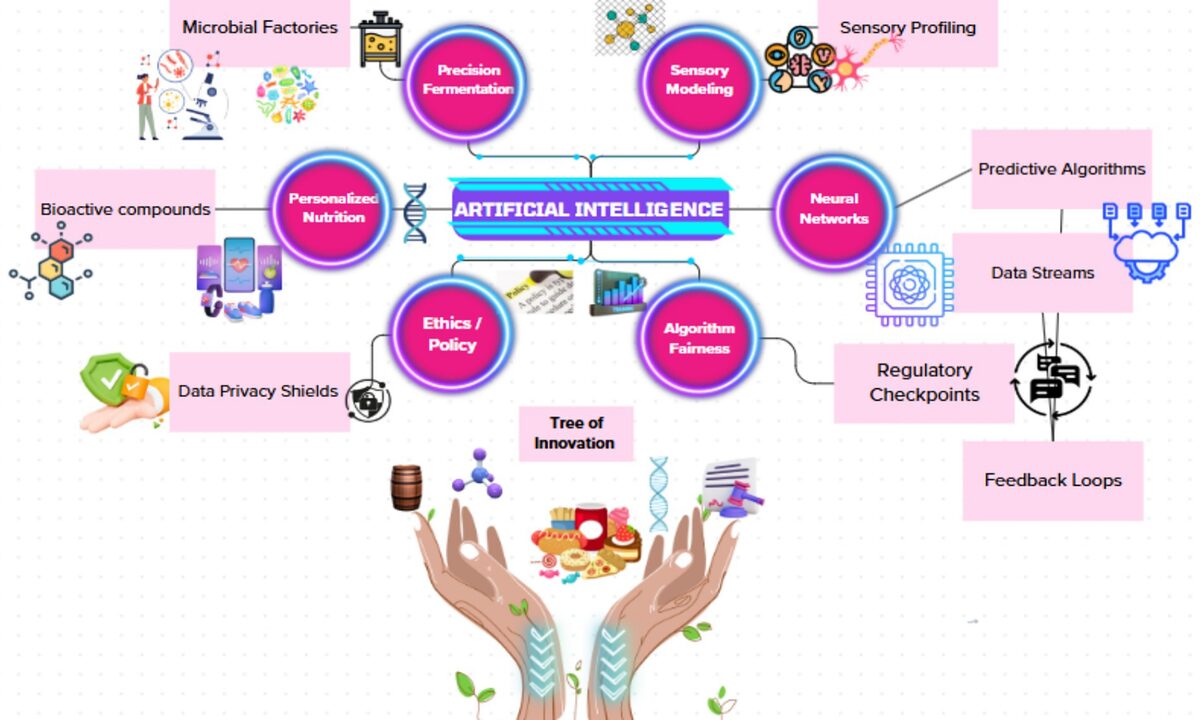
Artificial intelligence is reshaping Indian food processing plants — from quality control to predictive maintenance. The AI in food processing market in India is expected to reach $480 million by 2026 (MarketsandMarkets, 2025).
| Application | Description | ROI Impact |
|---|---|---|
| Computer vision QC | AI-powered cameras detect defects in grains, spices, packaged goods at 99.7% accuracy | 40% reduction in manual QC costs |
| Predictive maintenance | ML models predict equipment failure 72+ hours in advance | 30% reduction in unplanned downtime |
| Supply chain optimisation | AI demand forecasting reduces food waste by 15–25% in processing | 18% reduction in inventory carrying costs |
Real-world examples: ITC’s AI-powered spice sorting in Guntur, Nestlé India’s predictive analytics for Maggi production, and Britannia’s AI-driven bakery operations.
For small processors: Cloud-based AI tools (AWS Panorama, Google Vertex AI) now cost as little as ₹2.5 lakh per year — accessible even for mid-sized units.
Trend 6: Cloud Kitchens & Food Tech
India’s cloud kitchen market is projected to grow from $1.5 billion (2024) to $3.2 billion by 2026 (Redseer, 2025). The model’s asset-light nature continues to attract founders, but consolidation has intensified.
Market structure in 2026:
– Rebel Foods (Faasos, Behrouz Biryani, Oven Story) — 450+ kitchens, valued at $1.4 billion
– Box8 — 200+ kitchens, EBITDA-positive since Q2 2025
– FreshMenu — narrowed to profitable clusters in top 8 cities
– EatFit — cloud kitchen + physical stores hybrid model scaling
Emerging trends:
– Ghost kitchens in Tier 2/3 cities (Indore, Lucknow, Coimbatore seeing fastest growth)
– QSR chains licensing brands to cloud kitchens (KFC, Domino’s pilot programs)
– Cluster-based micro-fulfilment reducing delivery times to under 15 minutes
– AI-powered menu engineering — optimising SKUs based on real-time demand data
Key insight: Standalone cloud kitchens without brand differentiation or cluster density are failing. The 2026 playbook is consolidation and operational excellence.
Trend 7: Sustainability & Net-Zero Processing
Indian food processors are under mounting pressure — from regulators, retailers, and consumers — to demonstrate net-zero commitments. The FSSAI eco-labelling initiative (Trend 1) accelerates this shift.
What’s happening:
– Nestlé India — committed to 100% renewable electricity across all factories by 2026; 74% achieved as of 2025
– PepsiCo India — 100% water positive across direct operations; targeting net-zero emissions by 2040
– Britannia — 50% reduction in carbon footprint per tonne of production vs 2018 baseline
– Tata Consumer Products — zero waste to landfill across all manufacturing units
Waste reduction innovations:
– Spent grain → biogas in breweries (B9 Beverages, AB InBev India)
– Fruit waste → pectin, essential oils (Perfetti, field-level pilots)
– Solar thermal processing for dehydration — reducing LPG consumption by 60%
For FBOs: Carbon accounting is becoming a procurement requirement. Export-oriented processors targeting EU markets must comply with CBAM (Carbon Border Adjustment Mechanism) starting 2026.
Trend 8: Blockchain for Traceability
Blockchain-based traceability is moving from pilot to production in India’s food supply chains. IBM Food Trust has onboarded 15+ Indian food companies, and FSSAI launched a national traceability pilot for dairy and spices in 2025.
| Sector | Blockchain Initiative | Status |
|---|---|---|
| Dairy | Amul blockchain pilot for milk source traceability | 50+ villages, 2025–26 |
| Spices | FSSAI-Kochi blockchain traceability for turmeric/chilli | Pilot live in 6 districts |
| Tea | Tea Board India — blockchain for Darjeeling tea authentication | 2026 rollout |
How it helps:
– Instant recall capability — trace a contaminated batch to source in seconds vs. days
– Fraud prevention — counterfeit premium products (basmati rice, Darjeeling tea) worth ₹5,000+ crore annually
– Export compliance — EU and US importers increasingly require blockchain traceability documentation
– Premium pricing — traceable products command 10–18% higher prices in export markets
Next step: Expect FSSAI to mandate blockchain traceability for high-risk food categories (dairy, meat, spices) by 2027. Early adoption now is a competitive advantage.
Trend 9: Fortified & Functional Foods
FSSAI’s mandatory fortification of wheat flour, rice, milk, and edible oil — first introduced in 2018 — has been expanded in 2026 to include millets, pulses, and packaged salt. Combined with growing consumer demand for functional foods, this segment is booming.
Projected market growth:
– Indian fortified food market: $46 billion by 2026 (IMARC Group, 2025)
– Functional foods (probiotics, omega-3, protein-enriched): $6.8 billion by 2026
– 75% of Indian households now regularly purchase at least one fortified packaged food
Consumer drivers:
– Post-COVID health consciousness — immunity-boosting ingredients (turmeric, ginger, ashwagandha) in everyday foods
– Protein-enriched staples — atta, rice, and bread with added protein seeing 3x demand growth
– Gut health awareness — probiotic drinks (Yakult, Mother Dairy Probiotic Dahi) growing at 22% CAGR
– Cognitive health — Moringa, Brahmi, and omega-3 DHA infused snacks
Regulatory watch: FSSAI’s 2026 functional food guidelines now allow health claims backed by scientific evidence — opening marketing opportunities for compliant products.
Trend 10: Cold Chain Expansion
India’s cold chain infrastructure is undergoing its most aggressive expansion, driven by the Pradhan Mantri Kisan Sampada Yojana (PMKSY) — Cold Chain component — and private 3PL investment.
| Cold Chain Metric | 2024 | 2026 (Projected) | Growth |
|---|---|---|---|
| Total cold storage capacity | 34.5 million MT | 42.8 million MT | +24% |
| Reefer vehicles | 12,000 | 19,000 | +58% |
| Pack houses | 640 | 1,050 | +64% |
Major developments:
– Snowman Logistics expanding to 310+ warehouses with 310,000+ pallet positions
– ColdX — AI-enabled cold chain platform connecting processors with truckers, reducing empty-run waste by 30%
– Delhivery — partnership with Coldman Logistics for cold-chain e-commerce fulfilment
– Government push — 15 new mega food parks with integrated cold chain under PMKSY Phase 3
Why cold chain matters for trends: Without cold chain, farm-to-fork delivery of fresh produce, dairy, and processed meat collapses. The expansion enables every other trend on this list — from D2C fresh food to export growth.
Trend 11: Food Safety Culture Shift
Indian food businesses are moving beyond “certification-driven” food safety to a genuine proactive food safety culture. This shift is driven by FSSAI’s Food Safety Culture initiative (launched 2025) and increasing liability awareness.
What’s changing:
– From: “We need HACCP certification to get an FSSAI licence”
– To: “Food safety is our brand promise — and we verify it daily”
Key indicators of this shift:
– 3,200+ Indian food businesses have adopted voluntary FSSAI audits beyond mandatory compliance
– Food safety officer hiring increased 120% across mid-sized processors (2024–2026)
– Real-time pathogen monitoring (ATP swabbing, rapid PCR) replacing end-of-line testing
– Whistleblower mechanisms — FSSAI’s Food Safety Incident portal received 4,500+ reports in 2025
> Internal link: Read our complete guide on [HACCP Certification in India 2026](/haccp-certification-india-2026/) to understand the compliance framework.
Why it matters: One major recall can destroy a brand built over decades. Genuine food safety culture is no longer optional — it’s a competitive differentiator that retailers and export buyers are actively seeking.
Trend 12: India’s Food Exports Boom
India is positioning itself as the food factory for the world. Agricultural and processed food exports reached $55 billion in 2025 (APEDA), with the government targeting $100 billion by 2030.
Top export growth categories (2025–2026):
| Category | 2025 Exports | 2026 Target | Growth Driver |
|---|---|---|---|
| Processed fruits & vegetables | $2.1 billion | $2.8 billion | EU demand for organic/clean label |
| Marine products | $7.6 billion | $9.2 billion | Shrimp, frozen fish to US/EU |
| Basmati rice | $5.3 billion | $6.1 billion | Premiumisation + traceability |
| Spices | $4.2 billion | $4.9 billion | FSSAI blockchain trust |
| Millets | $72 million | $150 million | International Year of Millets tailwinds |
Key enablers:
– APEDA’s e-commerce platform — connecting 2,500+ exporters with global buyers
– FTA advantages — India-UAE CEPA, India-Australia ECTA, India-UK FTA negotiations
– Rupee trade settlement with 20+ countries reducing forex friction
– Quality infrastructure — 70+ NABL-accredited food testing labs added in 2 years
> Data source: APEDA Annual Reports 2025–26; DGCI&S Export Statistics.
Trend 13: Organic & Natural Food Growth
India’s organic food market is projected to double from $1.1 billion (2024) to $2.5 billion by 2026 (APEDA / Assocham). India already has the largest number of organic producers globally — over 4.4 million certified organic farmers.
Growth pillars:
| Segment | 2024 | 2026 (Projected) |
|---|---|---|
| Organic staples (rice, pulses, flour) | $480 million | $1.1 billion |
| Organic spices | $290 million | $520 million |
| Organic processed foods (snacks, beverages) | $180 million | $450 million |
| Organic tea/coffee | $95 million | $210 million |
Jaivik Bharat logo — FSSAI’s organic certification mark — now appears on 15,000+ products across 3,500+ brands.
Export demand: Indian organic exports grew 32% in 2025 to $1.04 billion, with the US, EU, and Canada as primary markets. Organic basmati rice, spices, and tea are top categories.
Challenge: Domestic organic awareness is still low outside metro cities, but e-commerce (particularly Amazon India’s organic storefront and Flipkart’s farm-to-fork vertical) is bridging the gap.
Trend 14: Direct-to-Farm Sourcing
Farm-to-fork supply chains are shortening. Food processors are increasingly bypassing intermediaries and sourcing directly from farmer producer organisations (FPOs) .
What’s driving this:
– E-Nam (National Agriculture Market) — integrated 2,200+ mandis, enabling digital procurement
– FPO consolidation — 10,000+ FPOs registered under the FPO scheme (2020–26), with 2,800+ actively trading
– Technology — platforms like DeHaat, Ninjacart, and WayCool Foods aggregating farm output at scale
– Cost benefits — direct sourcing reduces raw material costs by 12–18% for processors
Notable examples:
– ITC e-Choupal 4.0 — AI-driven procurement connecting 6.5 million farmers with food processors
– Amul’s blockchain milk sourcing — direct payments to 3.6 million dairy farmers
– Cargill India — direct wheat sourcing from 100,000+ farmers through contract farming
– FieldFresh Foods (Del Monte) — direct-from-farm sourcing for processed fruits
For processors: Building FPO relationships now ensures raw material security as climate volatility increases. Multi-year contracts with price escalation clauses are becoming standard.
Trend 15: Food Industry Employment Surge
India’s food processing sector is projected to employ 10.6 million people by 2026–27, up from 7.3 million in 2024 — a 45% increase in three years (Ministry of Food Processing Industries, 2025).
Where the jobs are being created:
| Sub-sector | New Jobs (2024–2026) | Key Roles |
|---|---|---|
| Food processing plants | 1.1 million | Machine operators, QC supervisors, production managers |
| Cold chain & logistics | 520,000 | Cold store managers, reefer drivers, supply chain analysts |
| Food tech & R&D | 180,000 | Food technologists, NPD scientists, sensory analysts |
| D2C / food e-commerce | 350,000 | Category managers, digital marketers, supply chain |
| Food safety & quality | 95,000 | Food safety officers, auditors, lab technicians |
Skill India initiatives:
– PMKSY skill development — training 1 lakh candidates in food processing skills by 2026
– FICSI (Food Industry Capacity and Skill Initiative ) — 45+ job roles standardised under NSQF
– NSDC partnerships with Zomato, Swiggy, ITC for food tech skilling
– National Institute of Food Technology Entrepreneurship and Management (NIFTEM) — 3 new campuses (Guwahati, Hyderabad, Gandhinagar)
For entrepreneurs: The talent shortage means businesses investing in training and retention (particularly in Tier 2/3 cities) will have a significant hiring advantage.
Trends at a Glance
| Trend | Impact Level | Timeline | Who It Affects Most | — | — | — | — | — |
|---|---|---|---|---|---|---|---|---|
| 1 | FSSAI 2026 Amendment | High | Now–2027 | All FBOs, especially packaged food brands | ||||
| 2 | D2C Food Brands Explosion | High | Ongoing | Manufacturers, retailers, brand owners | ||||
| 3 | Clean Label Movement | High | 2025–2028 | Processed food, snacks, beverages | ||||
| 4 | Plant-Based & Alternative Proteins | Medium-High | 2025–2030 | Meat, dairy, protein companies | ||||
| 5 | AI in Food Processing | Medium | 2025–2028 | Large/medium processors | ||||
| 6 | Cloud Kitchens & Food Tech | Medium | 2025–2027 | QSRs, restaurant brands, investors | ||||
| 7 | Sustainability & Net-Zero | High | 2026–2035 | Exporters, large processors | ||||
| 8 | Blockchain for Traceability | Medium-High | 2025–2029 | Dairy, spices, meat exporters | ||||
| 9 | Fortified & Functional Foods | High | Ongoing | Staples, dairy, snacks, beverages | ||||
| 10 | Cold Chain Expansion | Critical | 2024–2028 | Fresh produce, dairy, meat, pharma | ||||
| 11 | Food Safety Culture Shift | High | 2025–2028 | All FBOs, exporters especially | ||||
| 12 | Exports Boom | High | 2025–2030 | Export-oriented processors | ||||
| 13 | Organic & Natural Food Growth | Medium-High | 2024–2028 | Organic producers, exporters | ||||
| 14 | Direct-to-Farm Sourcing | Medium | 2025–2030 | Large processors, dairy, staples | ||||
| 15 | Employment Surge | High | 2024–2029 | HR, trainers, food tech institutes |
How to Prepare Your Business for These Trends
These 15 trends aren’t isolated — they’re interconnected. Here’s a practical framework for Indian food businesses to act on them:
##
1. Regulatory Readiness (Trends 1, 9, 11)
– Audit your current FSSAI compliance against 2026 amendments
– Start reformulation for front-of-pack labelling (reduced salt/sugar)
– Invest in HACCP certification if you haven’t already
> Internal link: Check our [detailed HACCP certification guide](/haccp-certification-india-2026/) for step-by-step compliance.
##
2. Digitise Operations (Trends 5, 8)
– Implement a basic ERP if you’re still on spreadsheets
– Explore AI-powered QC tools — start with one production line as a pilot
– Evaluate blockchain traceability if you export or source complex supply chains
##
3. Rethink Your Product Mix (Trends 3, 4, 9)
– Conduct a clean-label audit — reduce ingredients, remove artificial additives
– Consider a fortified version of your best-selling product
– If in meat/dairy, explore a plant-based or hybrid line
##
4. Strengthen Your Supply Chain (Trends 10, 14)
– Build relationships with FPOs in your sourcing region
– Audit cold chain — a gap here affects every downstream trend
– Diversify logistics partners — don’t rely on a single provider
##
5. Build the Right Team (Trend 15)
– Hire food safety officers early — they’re becoming harder to find
– Train existing staff through FICSI NSQF-certified programs
– Create retention mechanisms — the war for food tech talent is real
##
6. Go Global (Trends 12, 13)
– Register with APEDA for export certification
– Target one export market with a focused product line
– Ensure your packaging and labelling meet destination-country requirements
FAQs — Food Industry Trends in India 2026
1. What are the biggest food industry trends in India for 2026?
The most impactful trends include the FSSAI 2026 Amendment (perpetual licences, FOPL labelling), D2C food brand explosion, clean label movement, AI in food processing, and cold chain expansion. These five trends individually and collectively reshape how food businesses operate, market, and comply.
2. How is FSSAI changing licensing in 2026?
FSSAI is introducing perpetual licences (lifetime validity) for food businesses, new turnover thresholds for micro/small businesses, mandatory front-of-pack warning labels for salt, sugar, and saturated fat, and eco-labelling requirements. See Trend 1 above for full details.
3. What is the market size of India’s food processing industry in 2026?
India’s food processing market is projected to reach approximately $535 billion by 2026, growing at an 11.5% CAGR from $390 billion in 2024 (Invest India).
4. Is clean label just a trend or is it here to stay?
Clean label is here to stay. With 72% of Indian consumers influenced by “natural ingredients” and clean label products commanding a 15–25% price premium, this is a structural shift in consumer preference — not a passing fad.
5. Do I need blockchain traceability for my food business?
If you export to the EU, US, or Japan, or if you deal in high-risk categories (dairy, meat, spices), blockchain traceability will become a compliance requirement by 2027 at latest. Early adoption now positions you ahead of competitors.
6. How can small food processors adopt AI affordably?
Cloud-based AI tools (AWS Panorama, Google Vertex AI) now cost as little as ₹2.5 lakh per year. Start with a single use case — like computer vision quality control on one production line — and expand based on ROI.
7. What are the best food industry opportunities for new entrepreneurs in 2026?
Top opportunities include: D2C clean-label snack brands, millet-based functional foods, cold chain tech solutions, food safety consulting/auditing, and organic export aggregator platforms.
8. How do I prepare my business for new FSSAI labelling rules?
Start a product reformulation audit now (reducing salt, sugar, and saturated fat), invest in new packaging design that accommodates FOPL warnings, and train your compliance team on the 2026 amendment requirements. Allow 12–18 months for full transition.
Conclusion
The Indian food industry in 2026 is defined by convergence — regulation meets technology meets consumer expectation. The businesses that thrive won’t be the ones that chase every trend, but those that identify the 3–4 trends most relevant to their segment and execute them well.
Your next steps:
1. Identify which 3 trends from this list are most relevant to your business
2. Audit your current position against those trends
3. Act — start with one change this quarter
👉 Don’t navigate 2026 alone. Download our [2026 Food Trends Forecast (Free PDF)](#) — it includes detailed year-ahead planning calendars, regulatory checklists, and exclusive market data that didn’t fit in this article.
Author: Prashant Chavhan
Last updated: June 2026
Category: Market Intelligence
Tags: food industry trends india 2026, Indian food sector, FSSAI 2026, food processing trends, clean label India
> Internal links:
> — [HACCP Certification in India 2026](/haccp-certification-india-2026/)
> — [Food Industry Statistics India 2026](/food-industry-statistics-india-2026/)

Prashant Chavhan
Expert writer covering food technology, food safety, and industry innovations.