
/* ============================================================
FoodTechPro — Comprehensive Responsive CSS
============================================================ */
/* === 1. BASE RESET & BOX-SIZING === */
*, *::before, *::after { box-sizing: border-box; }
img { max-width: 100%; height: auto; display: block; }
/* === 2. TYPOGRAPHY — Responsive Scaling === */
html { font-size: 16px; }
body {
font-size: clamp(16px, 1.8vw, 18px);
line-height: 1.75;
-webkit-text-size-adjust: 100%;
word-wrap: break-word;
overflow-wrap: break-word;
}
h1 { font-size: clamp(1.5rem, 4vw, 2.2rem); line-height: 1.3; }
h2 { font-size: clamp(1.3rem, 3.5vw, 1.8rem); line-height: 1.35; }
h3 { font-size: clamp(1.15rem, 3vw, 1.5rem); line-height: 1.4; }
h4 { font-size: clamp(1.05rem, 2.5vw, 1.25rem); line-height: 1.45; }
p, li, td, th { font-size: clamp(15px, 1.6vw, 17px); }
/* === 3. CONTAINER — Max Widths === */
.container, .site-content, .content-area, main,
.wrapper, .inner, .entry-content, .post-content,
article, .main-content {
max-width: 1200px !important;
margin-left: auto !important;
margin-right: auto !important;
padding-left: 15px !important;
padding-right: 15px !important;
}
/* Paragraph & text blocks width limit */
.entry-content p, .post-content p,
.entry-content ul, .entry-content ol,
.post-content ul, .post-content ol {
max-width: 850px;
}
/* === 4. TABLES — Scrollable on Mobile === */
table {
width: 100% !important;
max-width: 100% !important;
border-collapse: collapse;
display: block;
overflow-x: auto;
-webkit-overflow-scrolling: touch;
}
.wp-block-table, figure.wp-block-table {
overflow-x: auto;
display: block;
max-width: 100%;
}
.wp-block-table table, figure.wp-block-table table {
min-width: 100%;
}
td, th {
padding: 8px 10px;
font-size: clamp(13px, 1.5vw, 16px);
word-break: break-word;
}
/* === 5. IMAGES === */
.entry-content img, .post-content img,
.wp-block-image img, figure img {
max-width: 100% !important;
height: auto !important;
display: block;
}
figure {
max-width: 100% !important;
margin-left: auto !important;
margin-right: auto !important;
}
/* === 6. BUTTONS — Touch-friendly === */
button, .button, .btn, a.button, input[type=”submit”],
.wp-block-button__link {
min-height: 44px;
min-width: 44px;
padding: 10px 24px;
font-size: clamp(14px, 1.5vw, 16px);
line-height: 1.4;
cursor: pointer;
touch-action: manipulation;
}
/* === 7. NAVIGATION — Mobile Hamburger === */
/* Hide desktop nav on mobile, show hamburger */
@media (max-width: 768px) {
/* Force hamburger behavior */
.main-navigation, .primary-menu, .nav-menu,
nav.main-nav, .site-nav, #site-navigation,
header nav, .header-nav {
display: none;
}
/* Show hamburger toggle */
.menu-toggle, .hamburger, .mobile-menu-toggle,
#menu-toggle, .nav-toggle {
display: block !important;
}
/* Mobile menu when open */
.main-navigation.toggled, .nav-menu.toggled,
.menu-open .main-navigation, .menu-open nav {
display: block !important;
position: absolute;
top: 100%;
left: 0;
right: 0;
background: #fff;
z-index: 9999;
box-shadow: 0 4px 12px rgba(0,0,0,0.15);
}
.main-navigation.toggled li, .nav-menu.toggled li {
display: block !important;
width: 100%;
}
.main-navigation.toggled a, .nav-menu.toggled a {
display: block;
padding: 12px 20px;
border-bottom: 1px solid #eee;
font-size: 16px;
}
/* Container full width */
.container, .site-content, .content-area, main {
padding-left: 12px !important;
padding-right: 12px !important;
}
/* Sidebar below content */
.sidebar, .widget-area, aside {
width: 100% !important;
float: none !important;
clear: both;
margin-top: 30px;
}
/* Content area full width */
.content-area, .entry-content, .post-content {
width: 100% !important;
float: none !important;
}
/* Prevent horizontal scroll */
body, html {
overflow-x: hidden;
max-width: 100vw;
}
}
/* === 8. TABLET (768px – 1024px) === */
@media (min-width: 769px) and (max-width: 1024px) {
.container, .site-content, .content-area, main {
padding-left: 20px !important;
padding-right: 20px !important;
}
.content-area, .entry-content {
width: 70% !important;
float: left !important;
}
.sidebar, .widget-area, aside {
width: 28% !important;
float: right !important;
}
body { font-size: 17px; }
}
/* === 9. LAPTOP (1025px – 1366px) === */
@media (min-width: 1025px) and (max-width: 1366px) {
.content-area, .entry-content {
max-width: 780px;
margin: 0 auto;
}
.sidebar, .widget-area, aside {
width: 25%;
}
body { font-size: 17px; }
}
/* === 10. DESKTOP (1367px+) === */
@media (min-width: 1367px) {
.container, .site-content {
max-width: 1200px !important;
}
.content-area, .entry-content {
max-width: 820px;
margin: 0 auto;
}
body { font-size: 18px; line-height: 1.85; }
}
/* === 11. EMBEDS & IFRAMES === */
iframe, embed, object, video {
max-width: 100% !important;
height: auto;
aspect-ratio: 16/9;
}
/* === 12. PRE / CODE BLOCKS === */
pre, code {
overflow-x: auto;
white-space: pre-wrap;
word-wrap: break-word;
max-width: 100%;
font-size: clamp(12px, 1.3vw, 14px);
}
/* === 13. FORMS === */
input, textarea, select {
max-width: 100%;
font-size: 16px !important; /* prevents iOS zoom */
padding: 10px;
}
textarea { width: 100%; }
/* === 14. UTILITY === */
.hide-mobile { display: none; }
.hide-desktop { display: block; }
@media (min-width: 769px) {
.hide-mobile { display: block; }
.hide-desktop { display: none; }
}
/* === 15. PRINT === */
@media print {
body { font-size: 12pt; line-height: 1.5; }
nav, .sidebar, .widget-area, footer, .comments { display: none; }
.content-area, .entry-content { width: 100% !important; float: none !important; }
img { max-width: 100% !important; page-break-inside: avoid; }
a[href]::after { content: ” (” attr(href) “)”; font-size: 10pt; }
}
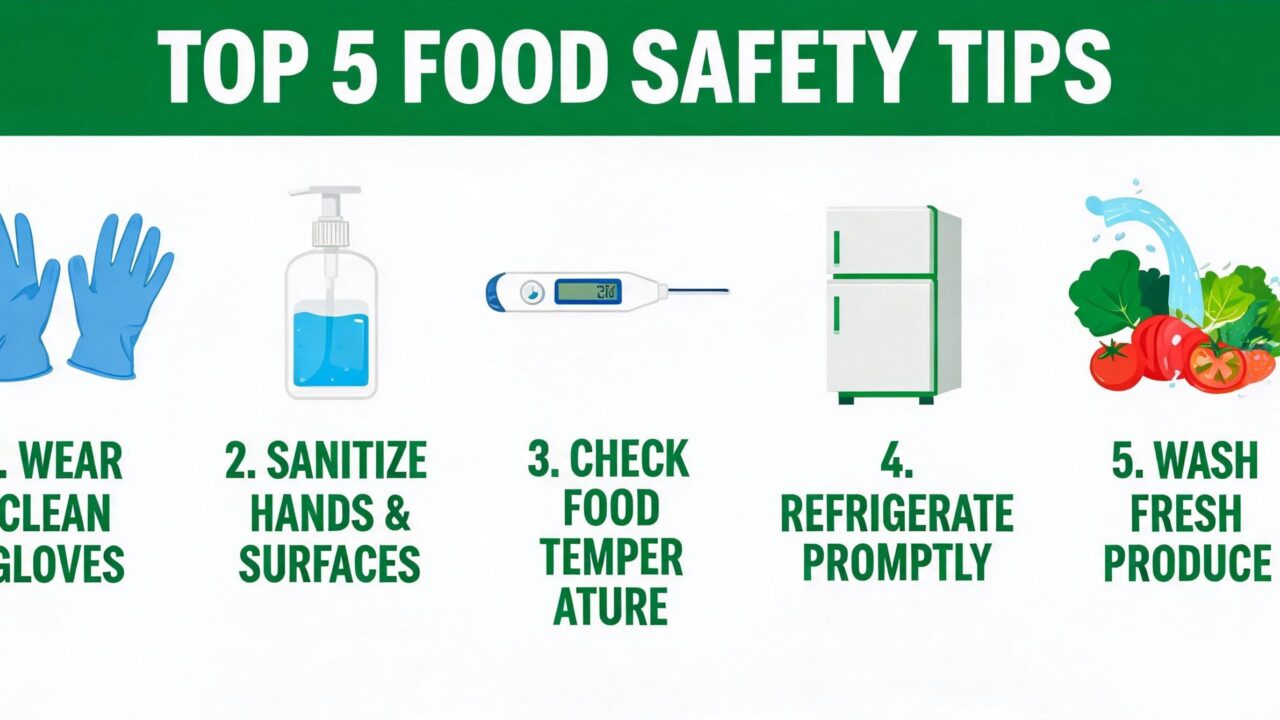
The Top 5 As per the FSSAI’s official guidelines Food Safety Tips Food Industry Should Know<

The food industry is responsible for producing safe and healthy food products that consumers can trust. It is essential to ensure that the food products are free from harmful contaminants and meet the required standards. In this blog, we will discuss the top 5 food safety tips that the food industry should know.
2. Proper Food Storage
By FoodTechPro Editorial Team
3. Proper Cleaning and Sanitization
4. Proper Cooking Temperature
5. Proper Labeling
Editorial Note: This article was originally published on FoodTechPro and has been updated for accuracy. The information provided is for educational and informational purposes only. Always refer to the latest FSSAI regulations, ISO standards, and official government publications for current compliance and safety requirements. FoodTechPro does not provide legal or professional advice. Consult a qualified professional for guidance specific to your business.
— Prashant Chavhan, Founder & Editor, FoodTechPro.co.in
Related Reading
Explore more articles on FoodTechPro:
- Food Safety Audit Checklist 2026: 40+ Points for HACCP & ISO 22000
- 🤖 Next-Gen Food Safety: AI Agents for Faster, Smarter Quality
- How to Become a Food Safety Officer in India: Step-by-Step Guide 2026