
/* ============================================================
FoodTechPro — Comprehensive Responsive CSS
============================================================ */
/* === 1. BASE RESET & BOX-SIZING === */
*, *::before, *::after { box-sizing: border-box; }
img { max-width: 100%; height: auto; display: block; }
/* === 2. TYPOGRAPHY — Responsive Scaling === */
html { font-size: 16px; }
body {
font-size: clamp(16px, 1.8vw, 18px);
line-height: 1.75;
-webkit-text-size-adjust: 100%;
word-wrap: break-word;
overflow-wrap: break-word;
}
h1 { font-size: clamp(1.5rem, 4vw, 2.2rem); line-height: 1.3; }
h2 { font-size: clamp(1.3rem, 3.5vw, 1.8rem); line-height: 1.35; }
h3 { font-size: clamp(1.15rem, 3vw, 1.5rem); line-height: 1.4; }
h4 { font-size: clamp(1.05rem, 2.5vw, 1.25rem); line-height: 1.45; }
p, li, td, th { font-size: clamp(15px, 1.6vw, 17px); }
/* === 3. CONTAINER — Max Widths === */
.container, .site-content, .content-area, main,
.wrapper, .inner, .entry-content, .post-content,
article, .main-content {
max-width: 1200px !important;
margin-left: auto !important;
margin-right: auto !important;
padding-left: 15px !important;
padding-right: 15px !important;
}
/* Paragraph & text blocks width limit */
.entry-content p, .post-content p,
.entry-content ul, .entry-content ol,
.post-content ul, .post-content ol {
max-width: 850px;
}
/* === 4. TABLES — Scrollable on Mobile === */
table {
width: 100% !important;
max-width: 100% !important;
border-collapse: collapse;
display: block;
overflow-x: auto;
-webkit-overflow-scrolling: touch;
}
.wp-block-table, figure.wp-block-table {
overflow-x: auto;
display: block;
max-width: 100%;
}
.wp-block-table table, figure.wp-block-table table {
min-width: 100%;
}
td, th {
padding: 8px 10px;
font-size: clamp(13px, 1.5vw, 16px);
word-break: break-word;
}
/* === 5. IMAGES === */
.entry-content img, .post-content img,
.wp-block-image img, figure img {
max-width: 100% !important;
height: auto !important;
display: block;
}
figure {
max-width: 100% !important;
margin-left: auto !important;
margin-right: auto !important;
}
/* === 6. BUTTONS — Touch-friendly === */
button, .button, .btn, a.button, input[type=”submit”],
.wp-block-button__link {
min-height: 44px;
min-width: 44px;
padding: 10px 24px;
font-size: clamp(14px, 1.5vw, 16px);
line-height: 1.4;
cursor: pointer;
touch-action: manipulation;
}
/* === 7. NAVIGATION — Mobile Hamburger === */
/* Hide desktop nav on mobile, show hamburger */
@media (max-width: 768px) {
/* Force hamburger behavior */
.main-navigation, .primary-menu, .nav-menu,
nav.main-nav, .site-nav, #site-navigation,
header nav, .header-nav {
display: none;
}
/* Show hamburger toggle */
.menu-toggle, .hamburger, .mobile-menu-toggle,
#menu-toggle, .nav-toggle {
display: block !important;
}
/* Mobile menu when open */
.main-navigation.toggled, .nav-menu.toggled,
.menu-open .main-navigation, .menu-open nav {
display: block !important;
position: absolute;
top: 100%;
left: 0;
right: 0;
background: #fff;
z-index: 9999;
box-shadow: 0 4px 12px rgba(0,0,0,0.15);
}
.main-navigation.toggled li, .nav-menu.toggled li {
display: block !important;
width: 100%;
}
.main-navigation.toggled a, .nav-menu.toggled a {
display: block;
padding: 12px 20px;
border-bottom: 1px solid #eee;
font-size: 16px;
}
/* Container full width */
.container, .site-content, .content-area, main {
padding-left: 12px !important;
padding-right: 12px !important;
}
/* Sidebar below content */
.sidebar, .widget-area, aside {
width: 100% !important;
float: none !important;
clear: both;
margin-top: 30px;
}
/* Content area full width */
.content-area, .entry-content, .post-content {
width: 100% !important;
float: none !important;
}
/* Prevent horizontal scroll */
body, html {
overflow-x: hidden;
max-width: 100vw;
}
}
/* === 8. TABLET (768px – 1024px) === */
@media (min-width: 769px) and (max-width: 1024px) {
.container, .site-content, .content-area, main {
padding-left: 20px !important;
padding-right: 20px !important;
}
.content-area, .entry-content {
width: 70% !important;
float: left !important;
}
.sidebar, .widget-area, aside {
width: 28% !important;
float: right !important;
}
body { font-size: 17px; }
}
/* === 9. LAPTOP (1025px – 1366px) === */
@media (min-width: 1025px) and (max-width: 1366px) {
.content-area, .entry-content {
max-width: 780px;
margin: 0 auto;
}
.sidebar, .widget-area, aside {
width: 25%;
}
body { font-size: 17px; }
}
/* === 10. DESKTOP (1367px+) === */
@media (min-width: 1367px) {
.container, .site-content {
max-width: 1200px !important;
}
.content-area, .entry-content {
max-width: 820px;
margin: 0 auto;
}
body { font-size: 18px; line-height: 1.85; }
}
/* === 11. EMBEDS & IFRAMES === */
iframe, embed, object, video {
max-width: 100% !important;
height: auto;
aspect-ratio: 16/9;
}
/* === 12. PRE / CODE BLOCKS === */
pre, code {
overflow-x: auto;
white-space: pre-wrap;
word-wrap: break-word;
max-width: 100%;
font-size: clamp(12px, 1.3vw, 14px);
}
/* === 13. FORMS === */
input, textarea, select {
max-width: 100%;
font-size: 16px !important; /* prevents iOS zoom */
padding: 10px;
}
textarea { width: 100%; }
/* === 14. UTILITY === */
.hide-mobile { display: none; }
.hide-desktop { display: block; }
@media (min-width: 769px) {
.hide-mobile { display: block; }
.hide-desktop { display: none; }
}
/* === 15. PRINT === */
@media print {
body { font-size: 12pt; line-height: 1.5; }
nav, .sidebar, .widget-area, footer, .comments { display: none; }
.content-area, .entry-content { width: 100% !important; float: none !important; }
img { max-width: 100% !important; page-break-inside: avoid; }
a[href]::after { content: ” (” attr(href) “)”; font-size: 10pt; }
}
FSSAI Schedule 4: Guidelines for 

Ensuring the safety and quality of food products is crucial to protect the public from any potential harm caused by consuming unsafe or low-quality food items. To achieve this, the Food Safety and Standards Authority of India (FSSAI) has established a set of guidelines known as FSSAI Schedule 4. These guidelines outline the standards for food additives and enzymes used in the food industry in India. In this blog post, we will take a closer look at FSSAI Schedule 4 and understand how it ensures the safety and quality of food products in India.
Food Additives
By FoodTechPro Editorial Team
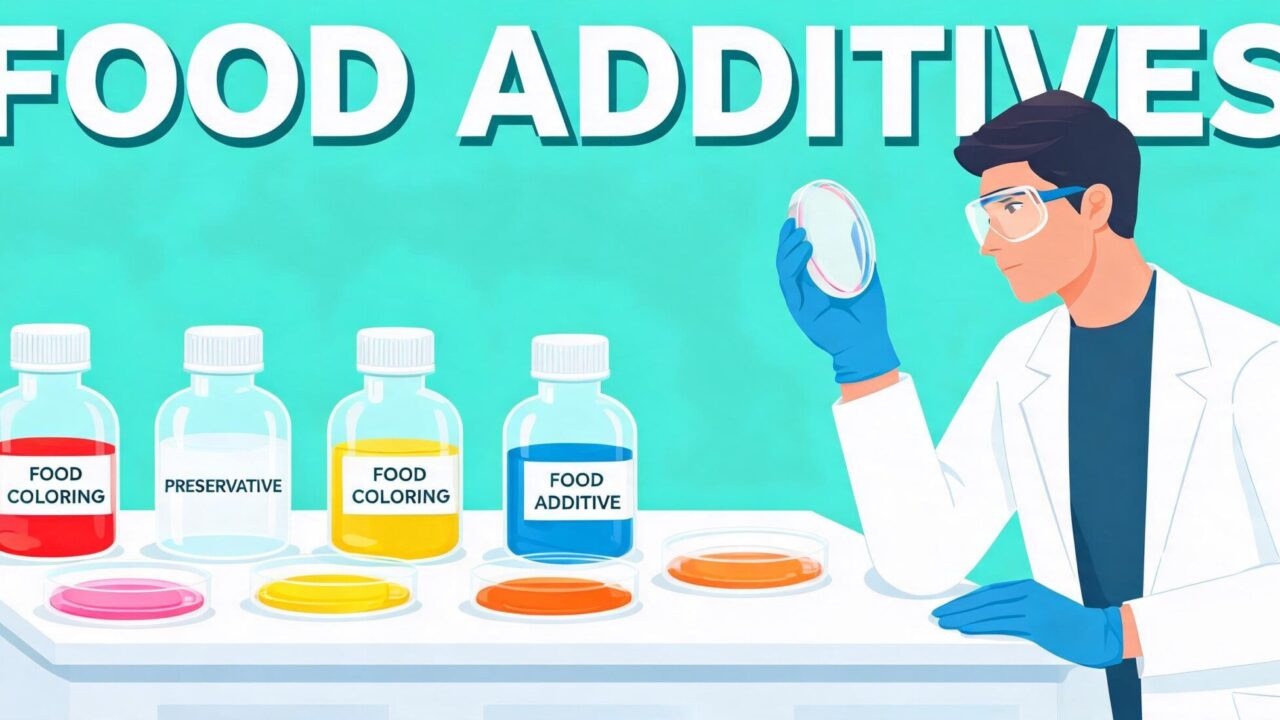
Food additives are substances that are added to food products to enhance their taste, texture, appearance, or shelf life. Some common examples of food additives include preservatives, flavorings, colorings, and sweeteners. In India, food additives must be approved by the FSSAI before they can be used in food products. The FSSAI has classified food additives into different categories based on their safety and usage such as ”permitted” and ”prohibited”. The permitted category includes additives that are considered safe for use in food products and have been approved by the FSSAI, while the prohibited category includes additives that are not safe for use in food products and have not been approved by the FSSAI.
The FSSAI also sets maximum permissible limits for the usage of food additives in different food products. For example, the maximum permissible limit for the usage of a particular preservative in a particular food product may be different from the maximum permissible limit for the usage of the same preservative in another food product.
Enzymes
Enzymes are also regulated by FSSAI Schedule 4. Enzymes are proteins that catalyze chemical reactions in food products, such as the conversion of starches to sugars or the fermentation of alcohol. Like food additives, enzymes must be approved by the FSSAI before they can be used in food products. Enzymes also have been classified into different categories such as ”permitted” and ”prohibited” based on their safety and usage.
Compliance and Enforcement
Food manufacturers must adhere to FSSAI Schedule 4 guidelines when using food additives or enzymes in their products. They must ensure that the additives or enzymes used are on the approved list, and that they are used in the correct amounts and in the appropriate category. Any deviations from the approved list or usage amounts must be reported to the FSSAI for approval.
The FSSAI also conducts regular inspections of food manufacturing facilities to ensure compliance with Schedule 4 guidelines. Any violations may result in fines or penalties, and in severe cases, the suspension or cancellation of the food manufacturer’s license.
In addition, food manufacturers are required to declare the use of food additives on the label of food products. This allows consumers to make informed choices about the food products they purchase and consume.
Conclusion
In conclusion, FSSAI Schedule 4 is a significant set of guidelines that ensures the safety and quality of food products in India by regulating the use of food additives and enzymes in the food industry. It is the responsibility of food manufacturers to comply with these guidelines to ensure that the food products they produce are safe for consumption. The FSSAI Schedule 4 also helps consumers to make informed choices about the food products they purchase and consume by mandating the declaration of food additives on food product labels. With FSSAI Schedule 4 in place, we can have peace of mind that the food products we consume are safe and of high quality.
Editorial Note: This article was originally published on FoodTechPro and has been updated for accuracy. The information provided is for educational and informational purposes only. Always consult the latest FSSAI regulations and official government publications for current compliance requirements. FoodTechPro does not provide legal or professional advice.
— Prashant Chavhan, Founder & Editor, FoodTechPro.co.in
Related Reading
Explore more articles on FoodTechPro:
- FSSAI License India 2026: Complete Guide for Food Businesses
- FSSAI License Fees 2026: Complete Pricing Guide for All Categories
- FSSAI License Renewal 2026: Step-by-Step Guide & Checklist